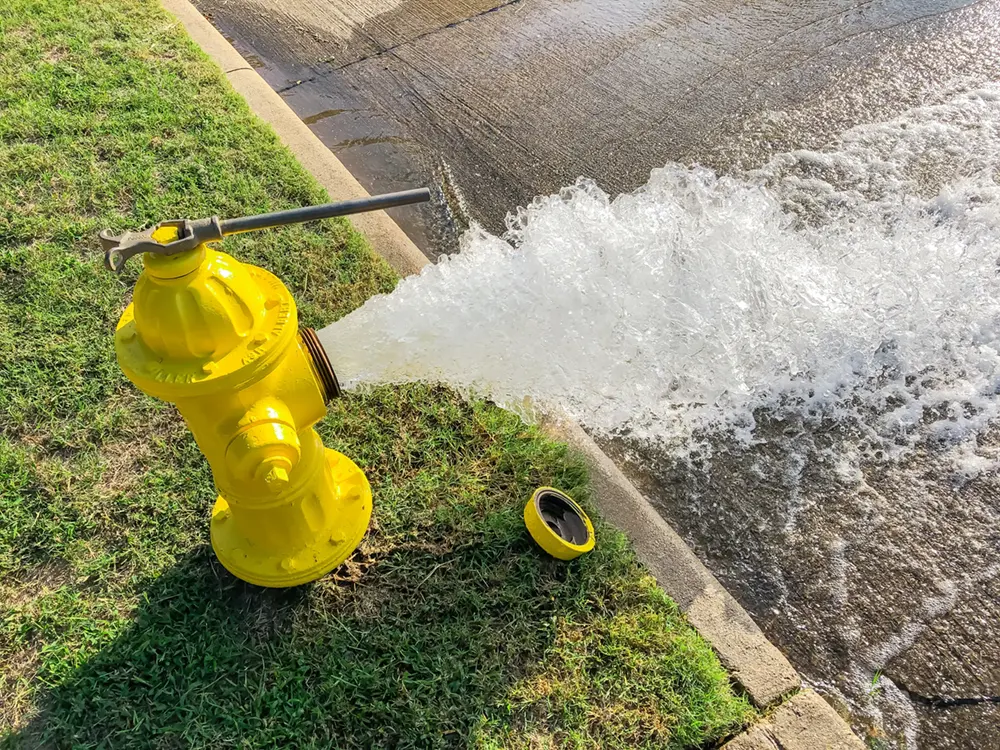
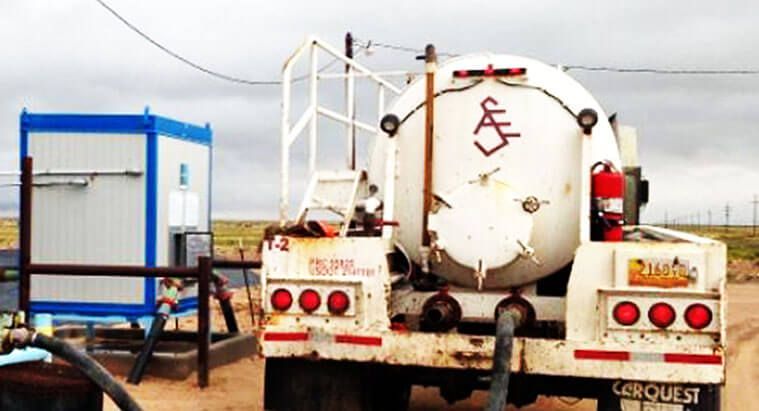
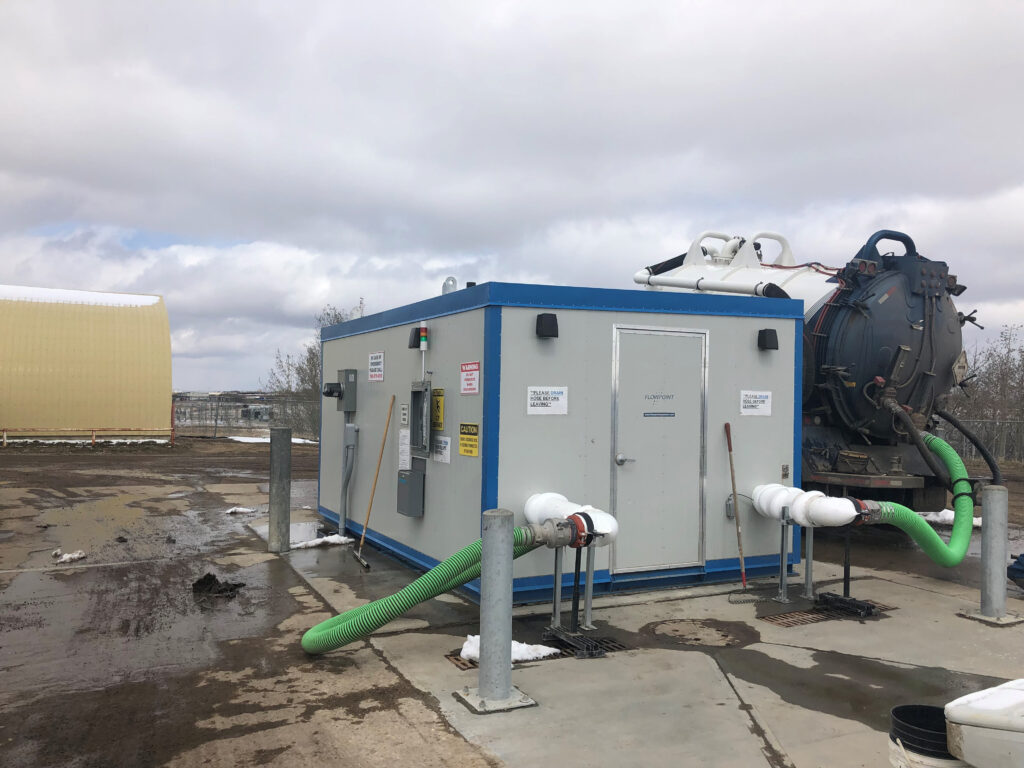
An automated septage receiving station enables municipalities to safely and efficiently control trucked liquid waste entering their wastewater treatment system. In effect, such a system provides confidence that you know what’s going on with your process.
You may know them by other similar, but varying names:
- Automated Septic Receiving Station or Management Facility
- Wastewater Tipping Station
- Automated Sewage Receiving Station or Management Facility
- Automated Liquid Waste Station or Management Facility
- Automated Wastewater Receiving Station or Management Facility
These systems authenticate haulers, meter/record each discharge by volume and time. Enforcing load limits or scheduling rules and protecting downstream processes. By automating access control, monitoring, and data collection, utilities reduce labor demands. Markedly, it improves regulatory compliance, and you gain full visibility into septage and other hauled waste streams.
At the same time, municipalities generate reliable revenue through accurately measured dumping fees. Transforming what was once a manual, staff-intensive operation into a secure, self-service, cost-recovering asset.
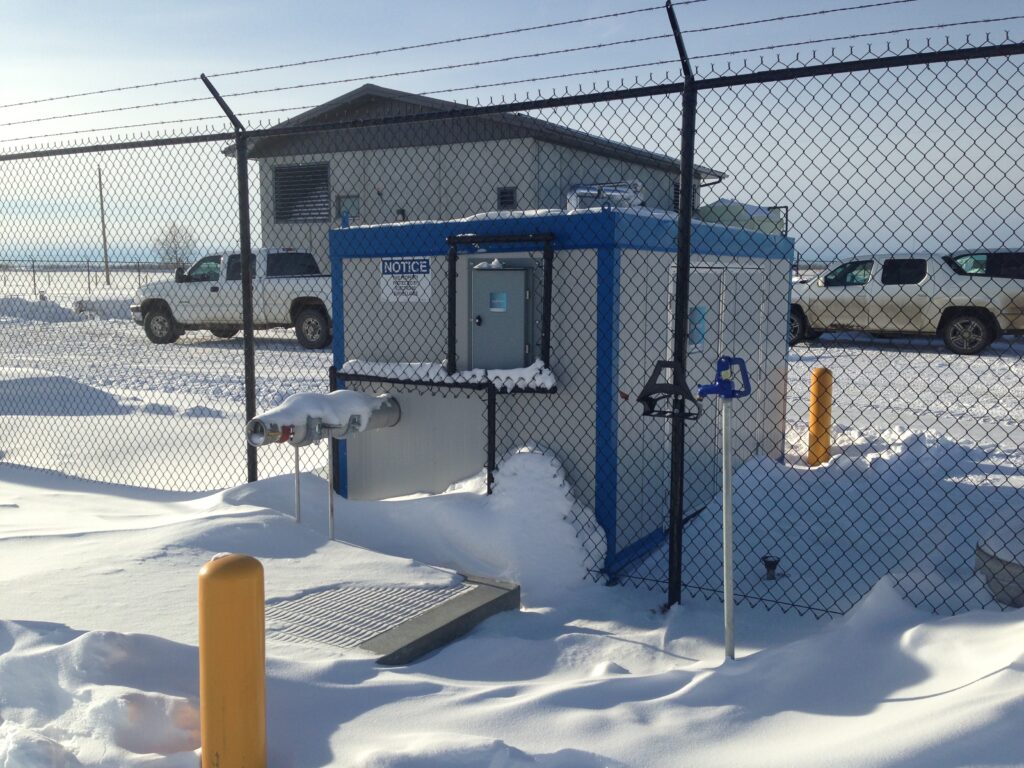
Automated Septage Receiving Station: No two are exactly alike
Each automated sewage receiving station serves a unique client base. It must accommodate a distinct mix of trucked liquid waste streams, which depends on local industries, hauling practices, and treatment plant capabilities. Variations in waste content, hauling frequency, and discharge volumes mean that each automated liquid waste station does not operate under identical conditions. Therefore, a one-size-fits-all approach can lead to inefficiencies and long-term maintenance challenges.
For example, some septage originates from sources that consistently contain higher concentrations of fats, oils, and grease (FOG). These contribute to clogs, odor issues, and reduced system performance if not properly managed. In other cases, stations receive industrial or specialty waste streams that require careful pH monitoring and control to prevent corrosion, scaling, or damage to downstream piping, pumps, and treatment equipment. These differing waste profiles demand targeted controls, sensors, and safeguards to ensure safe and reliable operation.
Municipalities should therefore prioritize selecting a custom automated sewage receiving station.
Especially one designed to address their specific operational requirements, without introducing unnecessary complexity, excessive maintenance demands, or increased long-term costs. Engineering systems for local conditions improves reliability, protects treatment infrastructure, and reduces demands on plant staff.
We incorporate customized features into every automated wastewater receiving station. As a result, each system matches its incoming waste stream, regulatory requirements, and operational goals. By employing intelligent automation, these septage receiving units can operate effectively and consistently under the unique environmental, chemical, and hydraulic conditions they encounter. Ensuring long-term performance, compliance, and operational confidence.
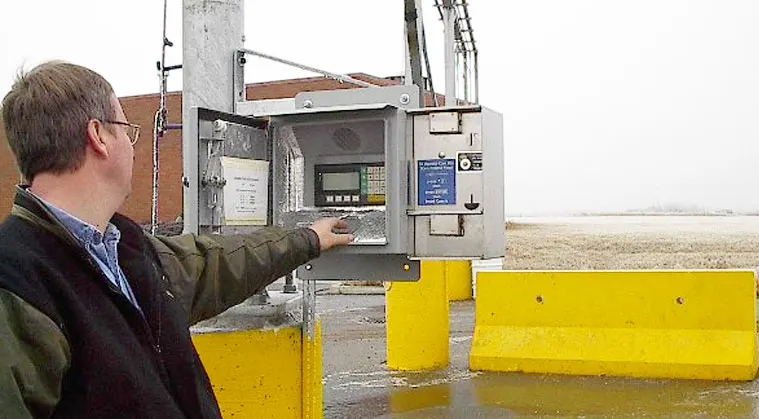
Here are just a few examples of benefits associated with custom features built into an automated wastewater receiving station:
- The use of automated billing systems can allow for accurate measurement of septage quantities. Allowing for the documentation of specific water quality constituents, such as pH, conductivity, or other parameters of concern.
- Installation of treatment processes for the collection of rocks and grit in solids-laden wastewater can benefit downstream system components by protecting them from damage. In contrast, automated flushing for maintaining these processes can significantly reduce maintenance requirements.
- Automated HVAC systems designed for specific climates can maintain suitable station temperatures for year-round receipt of waste.
An automated station can collect and analyze samples
An automated septic receiving station should operate under clearly defined protocols that enable sampling, collecting, and analyzing dumped loads. These procedures establish a reliable documentation trail while confirming waste characteristics and regulatory compliance.
By testing accepted material to ensure it meets required standards, facilities help safeguard downstream treatment processes from potential disruption because ongoing efforts to sample and analyze waste for pathogens, heavy metals, and other contaminants are essential. Ultimately, maintaining a safe, compliant, and well-controlled operating environment.
Improve efficiency for your automated liquid waste station with Flowpoint’s Septage+ Software.
Minimize administrative workload using our automated septic receiving station software. The secure, cloud-based portal enables customers to manage routine account tasks from a single central location efficiently. In essence, this centralizes everything for staff.
Through the software portal, customers can enroll in automatic invoicing, manage prepaid accounts, and add funds remotely. Providing near-instant access at every automated septic receiving station. With minimal effort, users can generate detailed reports whenever needed, eliminating phone calls, delays, and manual requests. As a result, you get an effortless self-serve experience that minimizes back-and-forth communication—reducing administrative workload, and improving overall billing and reporting accuracy.
From an internal operations perspective, the portal brings together user management, an automated septage receiving station, access control, and customer account management in one place, giving you clear visibility and audit-ready records. Teams can create standard usage reports in seconds, with flexible export options available at launch or added later to ensure clean data files that easily integrate with your existing billing systems.
By replacing paper forms, email chains, and repeated data entry with a single system, staff can make updates faster and more consistently. Teams spend less time on administrative work. Reducing errors, responding to customers more quickly, and devoting more time to higher-value tasks.
Considering site-specific operational requirements is essential when selecting an appropriate automated wastewater receiving station.
Choosing the right automated sewage receiving station design and automation configuration is critical to maximizing revenue potential. While simultaneously reducing long-term operational and maintenance costs. A well-engineered system ensures accurate metering of incoming loads, consistent fee collection, and reliable tracking of hauled waste, allowing municipalities to recover costs and generate predictable income without increasing staff workload.
Beyond financial benefits, an optimized design improves system reliability, protects downstream treatment infrastructure, and minimizes the need for manual oversight. Automated access control, monitoring, and reporting reduce labor requirements. Enhancing compliance with local and state regulations, and helping utilities manage a wide range of waste streams safely and efficiently.
Learn more about our automated septage receiving station and see how a custom-designed, fully automated solution supports your existing treatment process, operational goals, and regulatory requirements.
The experienced team at Flowpoint works closely with municipalities to deliver an automated liquid waste station that is dependable, scalable, and built for long-term performance. Contact Flowpoint today to begin designing a solution that improves efficiency, protects infrastructure, and delivers measurable value to your operation.