In the world of sanitation, one size does not fit all. Whether you’re a municipality, utility, industry, or private developer, the right system depends on space constraints, pollution types, effluent requirements, operator capacity, and budget. This guide compares the most common strategies in North America: lagoons, Moving Bed Biofilm Reactor (MBBR Treatment), and Membrane Bioreactor (MBR).
Not sure which one is right for you?
Read on for an outline of what works where and why. We break down the use cases, pros and cons, sludge management requirements, odors & emissions, and reuse potential for your wastewater.
Lagoons
The classic but space-hungry option.
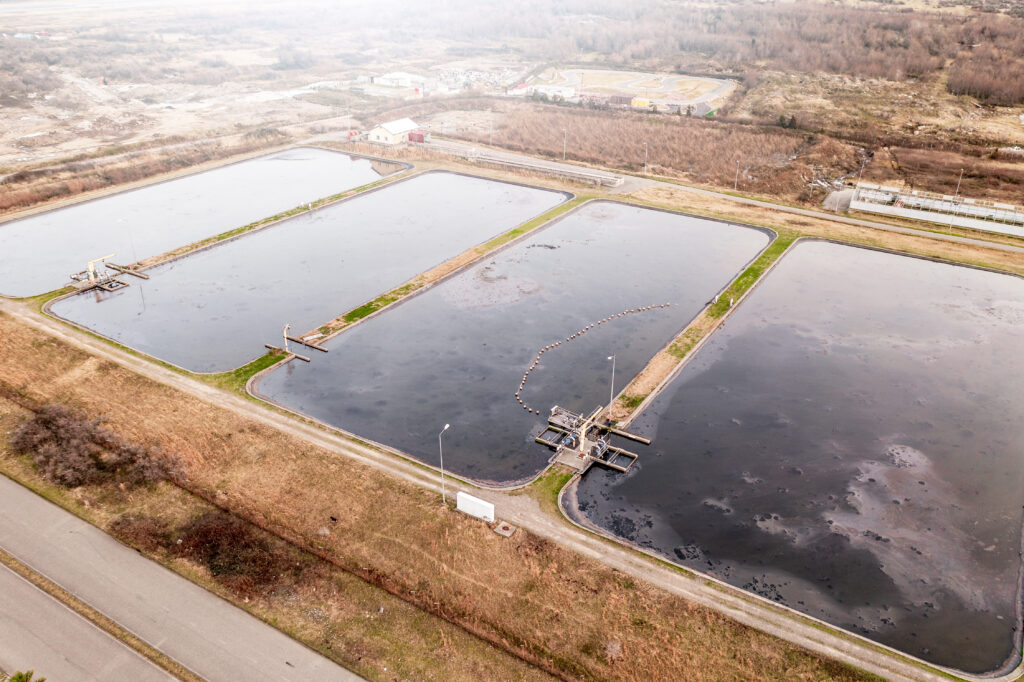
Lagoons are one of the oldest wastewater treatment technologies in North America. For instance, they rely on gravity, retention time, and natural biological processes to break down contaminants. Their simplicity is their strength and their weakness.
Flowpoint helps facilities meet ammonia and BOD limits when lagoons fall short, and land constraints threaten compliance.
Commonly best for:
- Small or rural municipalities
- Sites with ample land
- Locations with less rigid effluent requirements
| Pros: | Cons: |
|---|---|
| • Low operating cost • Simple to run • Minimal operator license requirements • Long design life | • Requires a lot of land • Can have high up-front costs due to excavation • Hard to meet modern ammonia and nutrient limits • Odor and vector concerns • Limited scalability • Capacity limitations due to discharge permits |
Sludge management requirements:
Lagoons collect sludge over time, which can include organic and inorganic waste. You need to consider that desludging events are costly and logistically difficult due to volume and transport needs.
Airborne emissions:
Overall, of the three most common types of wastewater treatment, lagoons have the highest potential for airborne emissions because they require long retention times and exposure to ambient air. They often lack real-time aeration control, leading to varying oxygen levels that can release:
- VOCs (chemical odors)
- Ammonia (sharp, pungent smell)
- Hydrogen sulfide (smells like rotten eggs).
Reuse potential:
Very low, as effluent often exceeds thresholds for solids, ammonia, and nutrients, further requiring advanced wastewater treatment for any reuse scenario.
Moving Bed Biofilm Reactor (MBBR Treatment)
In contrast to a Lagoon, MBBR treatment is a compact, upgrade-ready solution for meeting most discharge permit requirements.
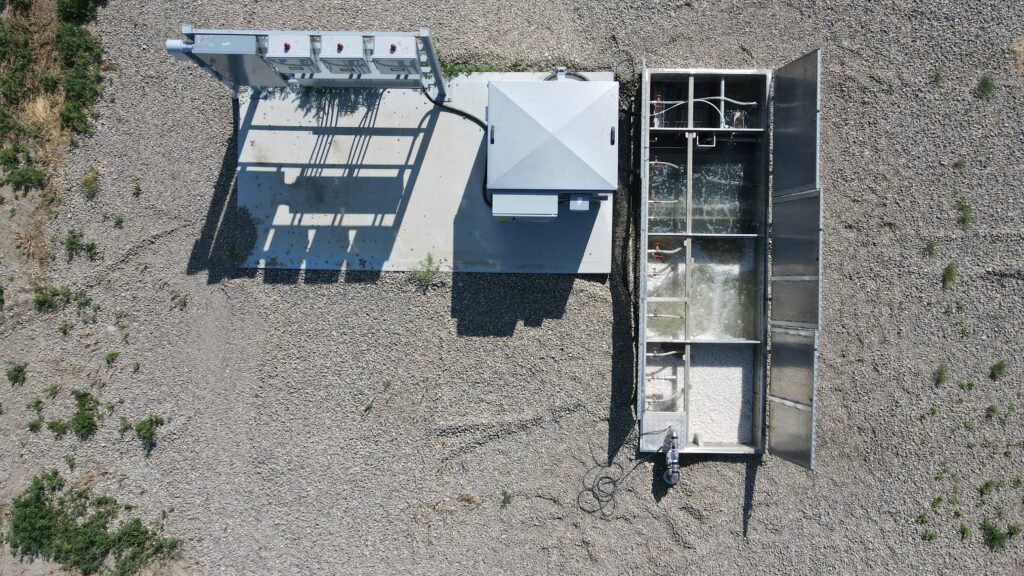
The Moving Bed Biofilm Reactor (MBBR Treatment) uses suspended biofilm media in aerated tanks for efficient wastewater treatment in a small footprint. Flowpoint engineers MBBR systems to support operations facing aging infrastructure, permit pressure, and space constraints. Especially if they have an existing lagoon system that can’t meet current nutrient discharge limits.
Commonly best for:
- Municipal upgrades, developments, resorts, food processing, industrial, packing plants, commercial applications, and lagoon replacements
- Sites that need better ammonia removal and flexibility
- Upgrading existing lagoon systems to meet strict discharge permits without an expansion of your existing setup.
| Pros: | Cons: |
|---|---|
| • Compact footprint • Often lower up-front cost than lagoons or Membrane Bioreactor (MBR) • Modular, scalable design • Effective at removing BOD, ammonia, and phosphorus • Low energy use compared to membrane systems • Simple to operate and automate | • Requires some mechanical aeration • May need filtration or UV for reuse • May require additional operator certification |
Sludge management:
Produces manageable volumes of waste-activated sludge (WAS). Flowpoint systems deliver predictable sludge handling with integrated dewatering options.
Airborne emissions:
The MBBR treatment process has lower off-gassing than lagoons. They use aerated reactors that maintain aerobic conditions, thereby reducing H₂S production. In addition, the footprint is smaller, and emissions can be easily managed or captured. A point often overlooked with MBBRs is their shorter retention times, which allow organics to break down contaminants more quickly and reduce the chance of odor development, as you typically see with an open-air lagoon.
Moderate to high. With polishing, MBBR effluent can meet non-potable reuse standards for irrigation, dust control, or industrial applications. Recent research shows MBBRs integrate well into energy-optimized, decentralized wastewater systems when paired with compact solids separation and digestion.
Contact us and learn how to pair the Moving Bed Biofilm Reactor (MBBR) with an automated bulk water dispensing system to reclaim water.
Membrane Bioreactor (MBR)
The go-to for wastewater treatment when you have tight permits and high reuse demand.
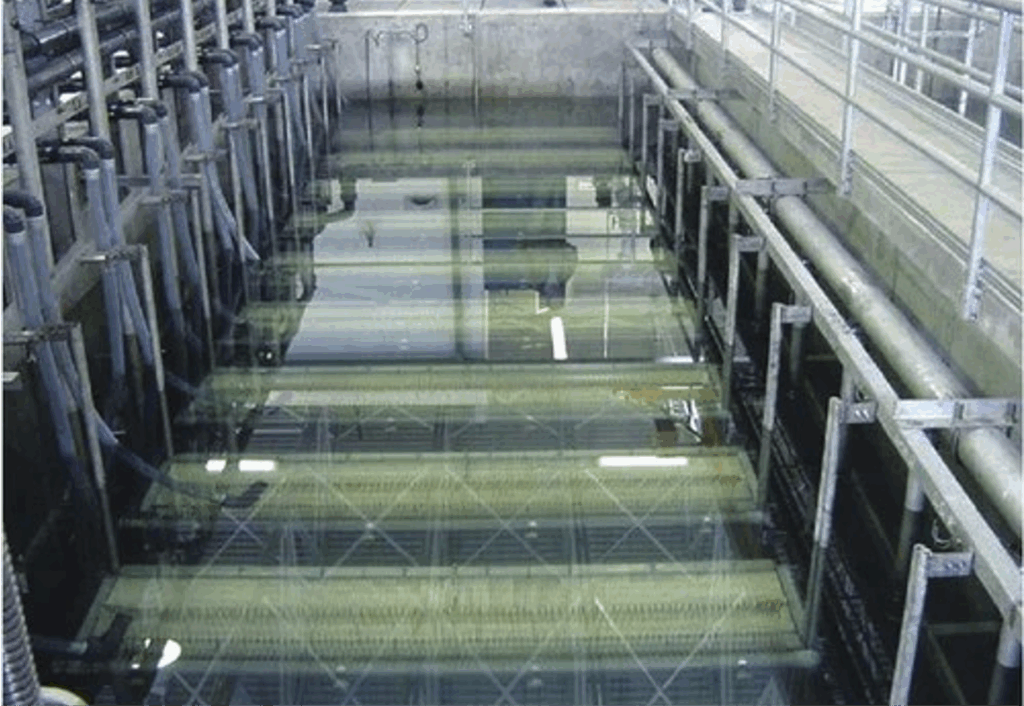
The Membrane Bioreactor (MBR) combines activated sludge with membrane filtration, producing high-quality effluent that meets or exceeds reuse standards. Historically, MBRs have required high capital and energy input, but emerging wastewater treatment designs are easing those barriers through hybrid systems and energy recovery.
Commonly best for:
- Discharge permits requiring BOD₅ or TSS below 5 mg/L
- Discharge into sensitive ecosystems
- Treatment of complex industrial wastewater streams with high toxicity or salinity
| Pros: | Cons: |
|---|---|
| • Highest effluent quality • Minimal land footprint • Ideal for reuse and sensitive discharge zones • Can handle saline and industrial wastewater, especially when integrated into hybrid MBBR-MBR systems • Compatible with advanced resource recovery technologies | • Higher upfront and O&M costs • Requires operators with higher levels of certification • Membranes need continuous cleaning and eventual replacement |
Sludge management
MBRs generate more frequent waste-activated sludge (WAS) due to high biomass concentration. Systems must manage sludge production while maintaining proper membrane performance.
Airborne emissions:
MBRs, due to their enclosed operations and membrane barriers, have the lowest potential for airborne contaminant release, especially with an advanced odor-control implementation. MBRs are fully or semi-enclosed, minimizing air exchange with the surrounding environment. They use fine-filtration membranes that trap wastewater organics that can contribute to odor. They often include advanced odor-control or air-handling systems, especially in high-end or urban installations.
Reuse potential:
Very high. As a result, the Membrane Bioreactor (MBR) produces effluent suitable for most reuse applications — from agricultural to industrial to indirect potable reuse. New research highlights hybrid MBR systems’ ability to improve nutrient capture, reduce membrane fouling, and lower energy intensity.
Learn more about going purple and tapping the resource of treated reclaimed wastewater using bulk water dispensing stations.
| Feature | Lagoon | MBBR | MBR |
| Use case | Rural, large footprint | Permit-driven upgrades | High-efficiency, reuse potential |
| Footprint | Large | Small | Very small |
| Effluent quality | Low | High | Very high |
| Energy use | Passive | Low | Moderate to high |
| Sludge handling requirements | Infrequent, bulky | Predictable, manageable | Frequent, dense |
| Reuse potential | Low | Moderate to high | Very high |
| Operator skill | Minimal | Basic | High |
| Up-front cost (CapEx) | Moderate to high (land-based) | Moderate | High |
| Ongoing operation costs (OpEx) | Low | Low to moderate | High |
So, which sanitation solution (Lagoon, MBBR Treatment, or MBR) should you choose?
There’s no one-size-fits-all answer, but there is a right-sized solution for your site, goals, and budget. Flowpoint can help you identify the optimal technology and, equally important, guide you through design, permitting, and implementation.
Every situation is unique, but our general rule of thumb is:
- Choose lagoons when land is abundant, and effluent requirements are low
- Choose MBBR treatment when you need scalable performance, permit compliance, and cost control. Especially when upgrading an existing lagoon or planning phased growth in your municipality or development
- Choose MBR when discharge limits are tight, space is scarce, or water reuse is the priority.
Let Flowpoint help you solve your wastewater treatment challenges.
Got a unique issue, looming fines, or a tight discharge limit? Let’s figure this out together.
In fact, we’re the water and wastewater experts. We’ll steer you right.