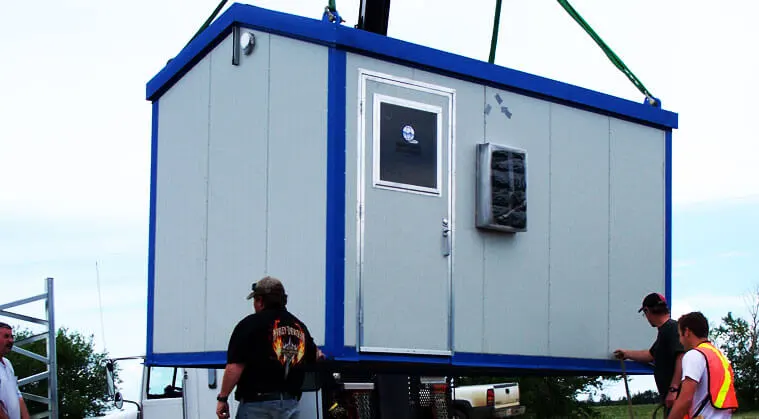

In Western Canada, most of our population lives in rural communities. Because of this, direct connections to sewage lines, so common in large cities, are absent, and it is here that septage receiving best practices and their associated systems play a major role.
Septic tanks are a common solution to this challenge, but they come with unique considerations due to septage waste.
This concentrated remnant of septic processes is often difficult to process and requires specialized receiving techniques. A custom solution at your treatment plant can ensure proper hauling of such trucked liquid waste, treatment, and disposal.
With Western Canada’s largely rural population, there are larger volumes and varying types of agricultural and industrial waste. It is little surprise that many municipalities are looking to upgrade or refine their current setup in line with modern septage-receiving best practices.
Fortunately, as communities’ needs grow, so does the sophistication of best practices.
Emptying septic tanks and trucking liquid waste to the treatment sites is only the first stage of the process.
Even septage of domestic origin presents challenges due to its dense composition. Driving a need for proper handling procedures and ensuring the protection of nearby water sources.
Industrial septage may contain fats, oils, and grease (FOG), heavy metals, or toxic compounds, requiring even more stringent procedures to protect against environmental concerns. Further, you also need to avoid disrupting or damaging treatment plant processes.
Screening procedures are in place to filter out and compact debris such as rocks, rags, and other solids. Grinders and rock traps remove larger objects that would otherwise block screens and downstream filtering equipment.
Augers can then remove solid material, allowing liquid waste to properly filter into the treatment facility.
The mechanics of a septage receiving system at the site, however, are only part of the overall process.
Even after removing disruptive solids, the chemical composition of liquid waste can still pose a threat to your process and equipment.
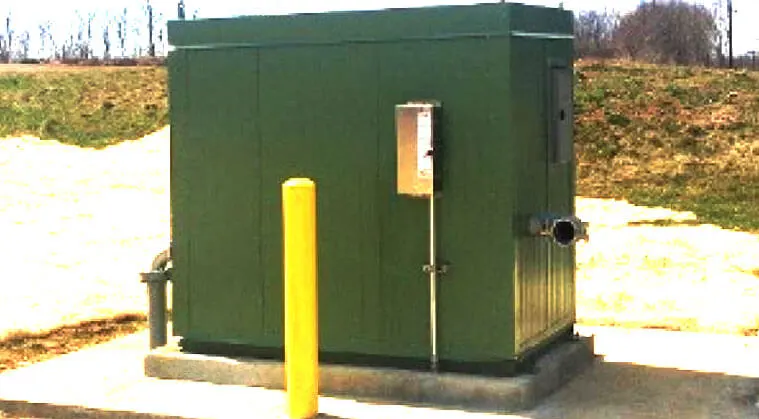
Without proper access controls for the automated septage receiving system, identifying the source of contamination is nearly impossible.
Septage content can vary greatly depending on its source. Potentially carrying levels of chemicals that are dangerous or damaging to plant operations. Receiving stations can provide safety and security, a primary concern for many municipalities.
Excessively acidic waste or toxic substances can increase maintenance costs. Furthermore, it risks violating regulations for treatable waste.
Many treatment facilities lack the equipment needed for septage receiving or handling high chemical concentrations. Ultimately, it creates a need to protect their system from such loads.
Getting onto the site can be dangerous. Therefore, operators need to restrict access to trained personnel. Which blocks unauthorized entry, preventing the illicit dumping of trucked liquid waste.
Installing a modern septage receiving system addresses these concerns directly. It strengthens security, creates clear accountability, and reduces administrative costs—all by streamlining how haulers unload and how operators track every transfer.
Installing a modern septage receiving station tackles these concerns head-on. It strengthens security, establishes clear accountability, reduces administrative costs, and ensures every disposal step complies with regulations.
Regulating physical access to the septage receiving system is perhaps the most traditional and effective way to ensure security.
Many septage receiving stations use card readers that require haulers to swipe access cards to unlock the station or receiving panel.
Other forms of authentication include keypads, which require haulers to securely log in before transferring their load.
Regardless of the supplier, the septage receiving system should uniquely identify each hauler. Providing a capability allowing for accurate volume logging, proper waste classification, and long-term monitoring of hauler access.
While protecting against illicit transfers or unauthorized personnel certainly improves the security of the station and treatment facility, it is also imperative to ensure the safety of haulers using the system.
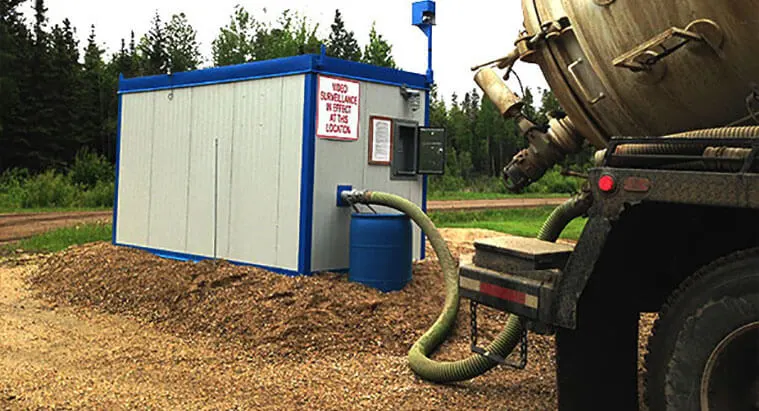
A quick-connect system should securely lock septage hauler hoses. Including this reduces the risk of hazardous spills and is a feature of almost every station.
Operating in Western Canada means planning for harsh winters. Therefore, a properly designed system must designate transfer areas with hard-surface containment. The system can then complement the site design with a hose-reel wash-down application, heated pads/lines, and enclosures to prevent freezing. Then it can continually keep operations safe even in sustained low temperatures.
Traditional septage receiving station designs require haulers to complete paper manifests for later submittal. A growing trend toward automated septage receiving systems improves accuracy and reduces administrative costs.
As such, septage-receiving best practices should include an advanced, secure access system. Providing such a system allows haulers to generate automated manifests.
Not only does a system make the hauler’s operation more convenient, but it also ensures that monitoring regulations are correctly adhered to.
Haulers usually generate manifests by entering the source of the trucked liquid waste themselves and using flow-measurement devices to record the exact volume the station receives.
Automating this process frees personnel who would otherwise staff the septage receiving station. It also provides precise records that municipalities can use to improve billing accuracy and increase revenue.
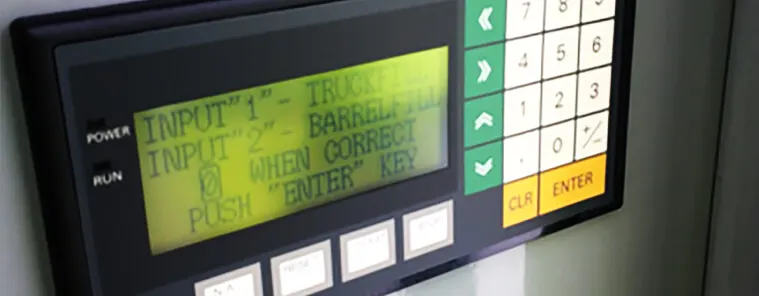
This information also allows them to bill accordingly, depending on whether the waste is domestic or industrial.
Monitoring the source and volume of septage loads, while a necessary first step to ensuring equipment protection and operations, can only go so far without verification of its accuracy.
An automated septage receiving system can include a sampler that lets operators periodically analyze a hauler’s transfer.
If a hauler’s stated load contents don’t match the sample results, operators can suspend their access immediately and keep it shut off until they investigate and resolve the discrepancy.
Automated samplers usually collect random samples, but some let operators flag haulers with past discrepancies and sample them more often.
Installation of advanced equipment, such as pH monitoring equipment, can also enable immediate analysis of septage characteristics, allowing the station to refuse a transaction if a load exceeds safe values.
Following septage-receiving best practices ensures the accuracy of the hauler’s submitted manifests. Providing detailed characteristic data for consideration by the treatment facility staff.
These sophisticated septage-receiving best practices help ensure the safety of personnel and equipment at your site. They also support compliance with regulations that protect treatment plants, haulers, and the communities they serve.