Go Purple – Tapping the Untapped Resource of a Water Reclamation System
The green revolution has changed people’s behaviors. Giving birth to technological innovations and public policy that help us use less and reuse more. Enter Flowpoint with our automated bulk water reclamation station, which can be deployed in your network, enabling you to operate your own water reclamation system and leverage its reuse initiatives.
Remember, paper recycling programs started as an outlandish idea.
The paper was cheap and plentiful. Why make an effort? Now, truly resourceful thinkers have made paper recycling—and the buying and selling of recycled paper products—commonplace. Delivering economic and environmental benefits at a scale unimaginable 20 years ago.
So what about water? People tend to see water in Canada as cheap and plentiful, too. And just as we used to use paper once and throw it away, we have a bias towards using water once. But that’s starting to change.
Traditionally, facilities treat wastewater for discharge into bodies of water, such as rivers or oceans.
But utilizing water reclamation system – wastewater treated for reuse in non-potable applications – has become common in the United States and around the world, and is becoming more common in Canada.”
Reclaimed water is not suitable for human consumption, even after processing. The specific composition of reclaimed water varies according to the sources that generate it and the treatment processes used.
Despite this, making reclaimed water available for specific, regulated uses can significantly ease the burden on drinking water supplies. Further, it provides for many economic advantages.
As regulatory agencies and industries explore the use of reclaimed water in Canada, we can learn from the innovations in public policy. Then we can apply that to infrastructure design and technology in place elsewhere.
Conservation Led to Innovation
In the southern United States, where drought and limited water supplies have fostered a strong water-conservation ethic, reclaimed water has dramatically reduced the draw on the potable water supply.
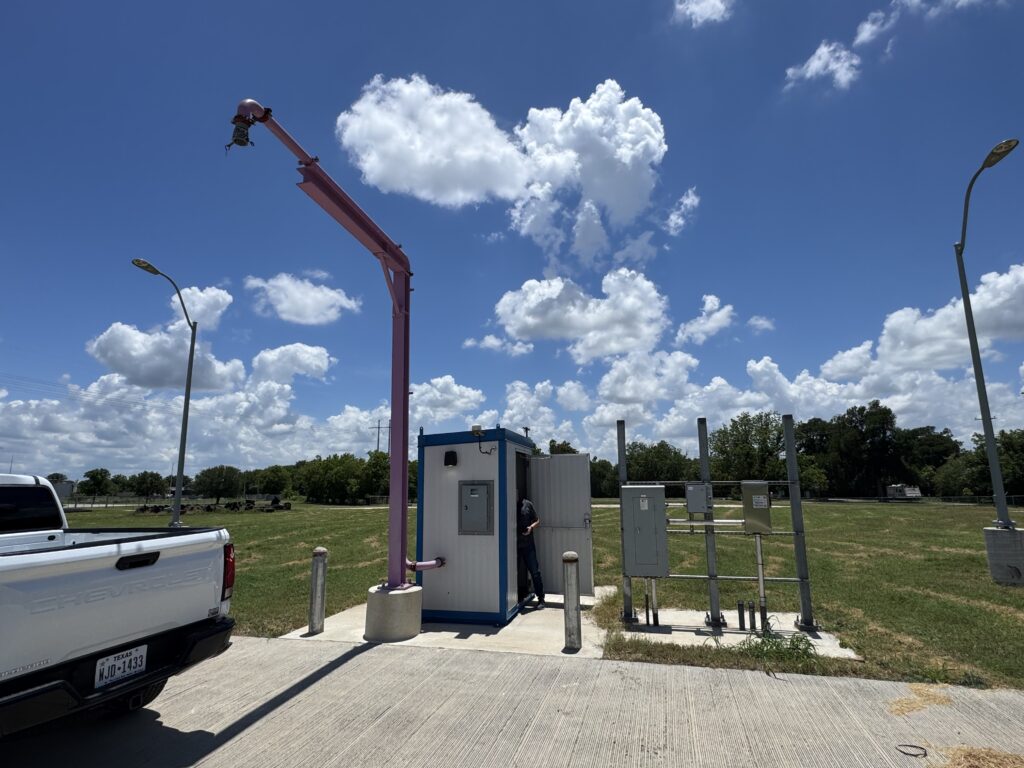
The City of Austin’s Water Utility in Texas began investigating a water reclamation station as a water-conservation measure. Now they use recycled water for street cleaning, irrigation, dust control, and construction.
“The City was and is experiencing a drought, as well as water theft from fire hydrants,” says Cole O. Newton, P.E., LEED AP, Reclaimed Water Project Manager, Austin Water.
“Currently, we are installing three permanent reclaimed bulk water filling stations on Austin’s water reclamation system. We are expecting to see steady use of the systems.”
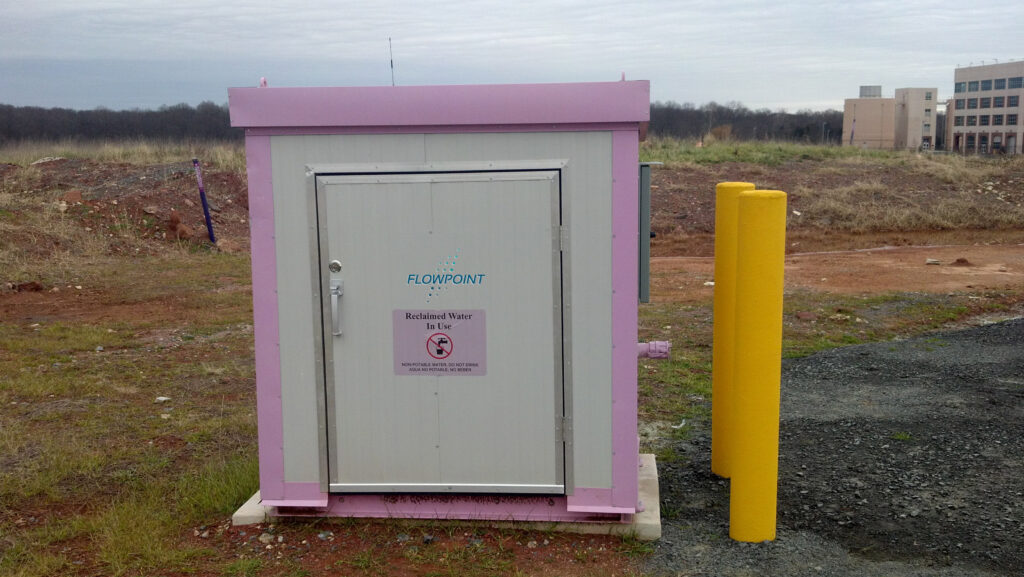
A water reclamation station, manufactured in Alberta by Flowpoint, provides secure access to your water source.

Automated Bulk Water Stations are significantly easier to use than fire hydrants. Therefore, regular and transient water haulers are more than happy to use them.
The truck fill stations benefit the municipality as well, as they enable automatic billing. Many municipalities see it as a simple return on their initial infrastructure investment.
The City of Austin is keenly aware that as construction and density go up, so too will the need for water.
In addition to installing the automated bulk water truckfill stations, they are actively educating the public and allowing new and potential users to learn about the water reclamation station and understand how to operate the stations.
“We expect to see enough use and demand to install an additional nine stations throughout the City,” says Newton.
Their ultimate goal is to divert water demand from the potable water system to the reclaimed water system whenever possible.
Setting policy and implementing systems to ensure the safe use of reclaimed water is critical for public health. In turn, all communities benefit from these regulations.
Across North America, jurisdictions use reclaimed water in refineries, parks, cooling systems, golf courses, mining operations, and even homes.
Some municipalities also experiment with groundwater recharge programs that allow natural processes to treat reclaimed water further and replenish the water table.
Cue the purple revolution, led by water reclamation systems.
Across North America, utilities color reclaimed-water pipes purple. This system prevents crews from accidentally connecting potable dispensing points to reclaimed supplies. It clearly signals to haulers and users that the water isn’t for human consumption.
Public policy in Canada is catching up, and regulators are clearly outlining allowable uses of reclaimed water.
Commonly, US regulatory agencies, including those in Austin, Texas, classify reclaimed water based on its degree of treatment. Allowing them to approve its use in applications based on its quality.
British Columbia has taken a similar position. Making provisions for both indoor and outdoor use of reclaimed water based on water quality.
Meanwhile, in Alberta, industry uses reclaimed water—for example, the Edmonton Suncor refinery, which draws treated wastewater from the Gold Bar Wastewater Treatment Plant.
And while the province already uses reclaimed water for irrigation, Alberta Municipal Affairs has not yet approved its use for indoor purposes such as toilet flushing. The department is now developing policies and safety guidelines to support that kind of use.
Clearly, improving how we use our water supply requires a strong business and environmental case.
Innovations in technology, such as water reclamation systems and the secure, automated bulk water reclamation station used in Austin, are already available.
The more we take advantage of these innovations, the more we will understand the untapped potential of reclaimed water systems in our industry and our communities, while accelerating sustainability goals, reducing costs, and strengthening long-term water resilience for future generations globally.