

1. Using a hydrant meter for an automated bulk water system is archaic
Automated bulk water truckfill systems (also known as Water tipping stations) are a popular option for municipalities and organizations. Because operators must supply large water volumes efficiently and responsibly, these systems offer significant value. They dispense Water securely and in a controlled manner, unlike hydrant meters not designed for frequent bulk loading.
Misusing fire hydrants can be extremely dangerous. The sudden release of high-pressure Water can cause serious injury to operators or bystanders. Long-term improper connections can further damage hydrants or underground infrastructure. Over time, this damage may leave firefighters without reliable access to Water during emergencies, especially when hydrants are removed from service or fail.
Beyond safety concerns, hydrant misuse raises significant issues related to accountability and cost. Unmetered or poorly tracked water use can lead to revenue loss, inaccurate billing, and water theft. Automated truckfill systems address these challenges by providing precise metering, controlled access, and clear usage records. Thus helping utilities protect public infrastructure while managing water resources more effectively.
2. Good design eliminates the risk of human error
With automatic monitoring software, utilities significantly reduce the need to assign employees to routine monitoring and oversight tasks. Automated systems continuously track activity in real time. Allowing staff to focus on higher-value operational and customer service responsibilities instead of manual data collection or onsite supervision.
In addition, an automated bulk water system keeps administrative overhead low while simplifying accounting and financial management. Built-in software records every transaction, eliminating guesswork and reducing errors associated with manual logs or paper records.
The software tracks each customer’s water usage in detail, and staff can generate accurate invoices on demand, ensuring billing remains transparent, consistent, and easy to manage. Usage history and reporting tools also support audits and long-term planning.
When a customer falls behind on payments, staff remotely restrict water access until the account is current. This capability enhances revenue protection while maintaining fairness and reducing the need for time-consuming in-person enforcement.
3. Wasting Water is a Thing of the Past
With an automated bulk water system, the unit delivers only the exact amount of Water each customer requests. This precision allows utilities to track every gallon dispensed, improving visibility into usage patterns while minimizing waste and keeping operational costs under control. Accurate measurement also supports better planning and resource management across the distribution system.
Haulers enter the exact amount of Water they need before dispensing begins, ensuring each transaction aligns with their specific job requirements. If conditions change or an error occurs during filling, operators can immediately press the emergency stop button, halting the process safely and preventing overfilling or spills.

By automating the dispensing process, the system removes common sources of human error associated with manual valves and visual estimation. It consistently delivers exactly the required volume—no more, no less—every time a customer fills a truck or a tank.
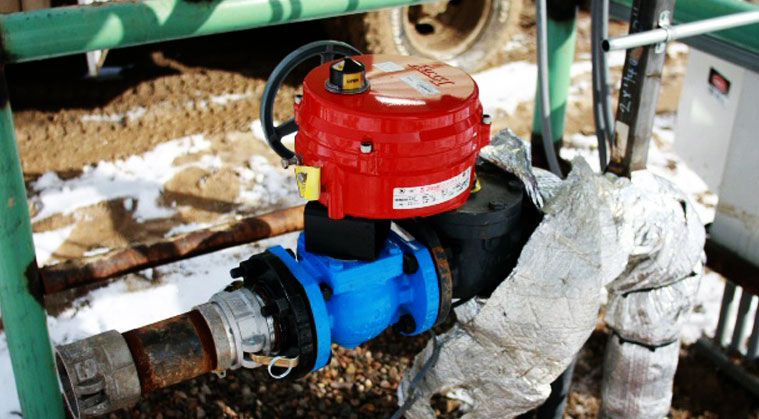
Advanced software algorithms control valve operation with high accuracy. Allowing the valve to close smoothly and precisely at the target volume. This controlled shutdown prevents pressure surges and water hammer, helping protect your distribution infrastructure and extend the life of connected equipment.
4. An Automated Bulk Water System Generates Revenue
Our integrated system permits you to charge a fair and consistent price for every gallon of Water used. By accurately accounting for all Water taken by haulers, the automated bulk water stations help utilities protect revenue and improve profitability. Automation reduces the need for onsite staff, lowering labor costs while ensuring that every transaction is properly measured and billed.
The system automatically delivers detailed reports that clearly track transaction timing, dispensing locations, and customer water usage. These clear, organized records make it easy to monitor activity, analyze usage trends, and manage the business with confidence and transparency.
When a wired connection is unavailable, the system wirelessly transmits data from multiple dispensing stations over the internet, allowing staff to oversee operations without visiting each site. From a single, centralized dashboard, personnel can manage customers, review reports, and monitor system status across all locations.
By streamlining oversight and eliminating manual processes, the system saves valuable staff time and reduces administrative burden. Time is money, and an automated bulk water system delivers meaningful time savings while supporting efficient, scalable operations.
While an automated bulk water system (water tipping station) is great for municipalities and organizations for a variety of cost- and safety-related reasons, they are also beneficial to the water hauler.
5. 24/7 Secure Access
An Automated Bulk Water System gives consumers secure, around-the-clock access to Water whenever they need it. The system replaces physical keys, fobs, and access cards with electronic access control, improving reliability while reducing administrative overhead.
This approach ensures authorized users can obtain Water whenever they need it, including nights, weekends, and holidays. At the same time, utilities maintain full control over who can dispense Water and under what conditions. Digital access controls also simplify user management, allowing staff to grant, modify, or revoke access remotely as operational needs change.
They are easy to use, as on-screen instructions guide the customer through using the water tipping station.
The system takes the hassle out of record keeping for water haulers, offering onsite receipt printing and automatic email delivery of detailed transaction records.
Automated systems can also display the customer’s account balance with each purchase. In turn, this eases the burden of accounting for the consumer as well.

