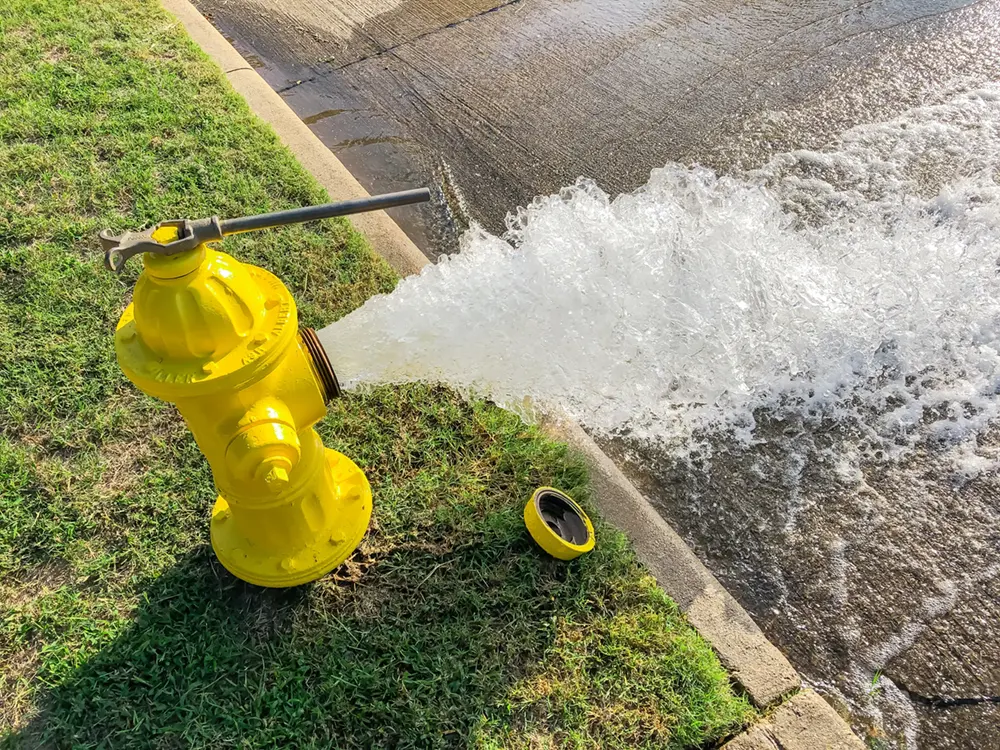
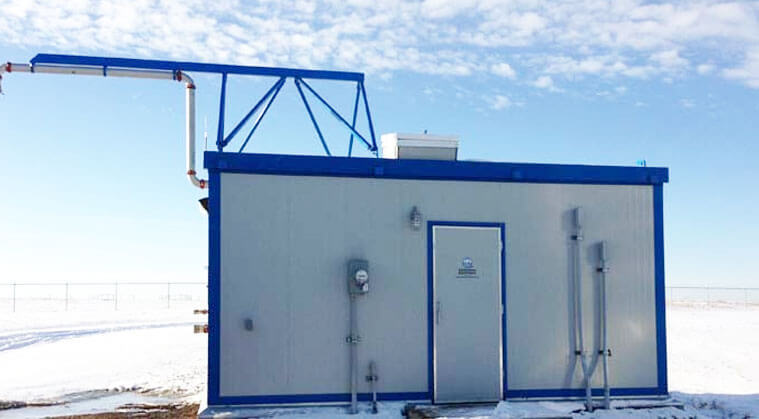
Implementing a Bulk Water Truckfill system can help address some of the challenges faced by traditional piped water systems. For the most part, capital costs for piped water systems in Northern climates have traditionally been high. These systems also face operating challenges during periods of extreme cold. Above-ground systems are common because installing in permafrost brings its own challenges.
As a result, northern communities address water distribution challenges by utilizing bulk water truckfill stations to meet their needs.
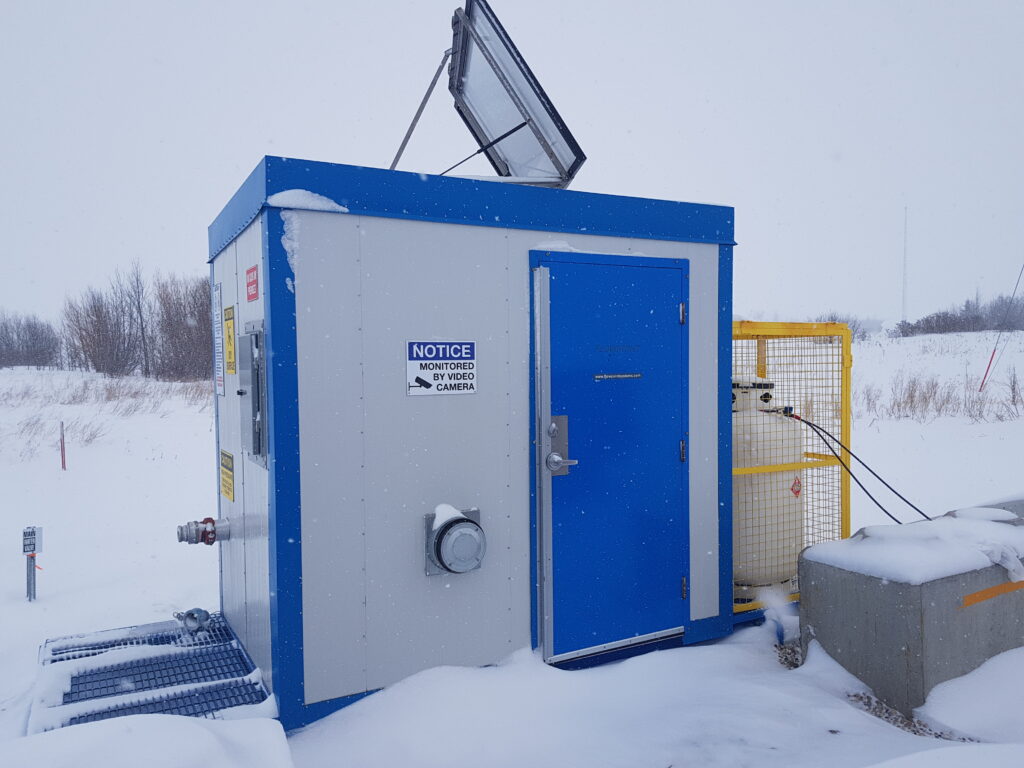
A bulk water truckfill station offers communities a safe and cost-effective water distribution method well suited to northern climates.
Advances in dispensing technology have enabled the deployment of fully standalone, automated bulk water stations, which operate independently of onsite staff. Operators can strategically locate these stations to improve customer access and reduce travel time, supporting more efficient day-to-day operations.
At the same time, the system maintains continuous control over the water distribution process, protecting the water supply and ensuring secure, accountable access at all times. Utilities gain the flexibility of decentralized access without sacrificing oversight, security, or operational control.
Northern US: Ninilchik, Alaska
The community of Ninilchik, Alaska, has a bulk water filling station to meet its water transfer needs. This community, situated on the western coast of the Kenai Peninsula on Cook Inlet, has a population of about 900 residents and traces its settlement back to 1847.
Traditionally, people have obtained water by hauling it from centralized sources or drawing it directly from private wells. While these methods have long been common, they often yield water that varies widely in quality, consistency, and reliability.
In many cases, the source and treatment level of the water can vary significantly from one household to another. Creating uncertainty around safety, usability, and suitability for different applications.
Effectively meet your community’s needs with a bulk water truckfill system. Yet, as with all northern communities, unique considerations have been specified for the station design process.
The average summer temperatures in Ninilchik range from 7°C (45°F) to 15°C (59°F). In winter, it can range from -10°C (14°F) to -3°C (27°F). While less extreme than in many northern communities, planners still needed to address these operating conditions when designing infrastructure.
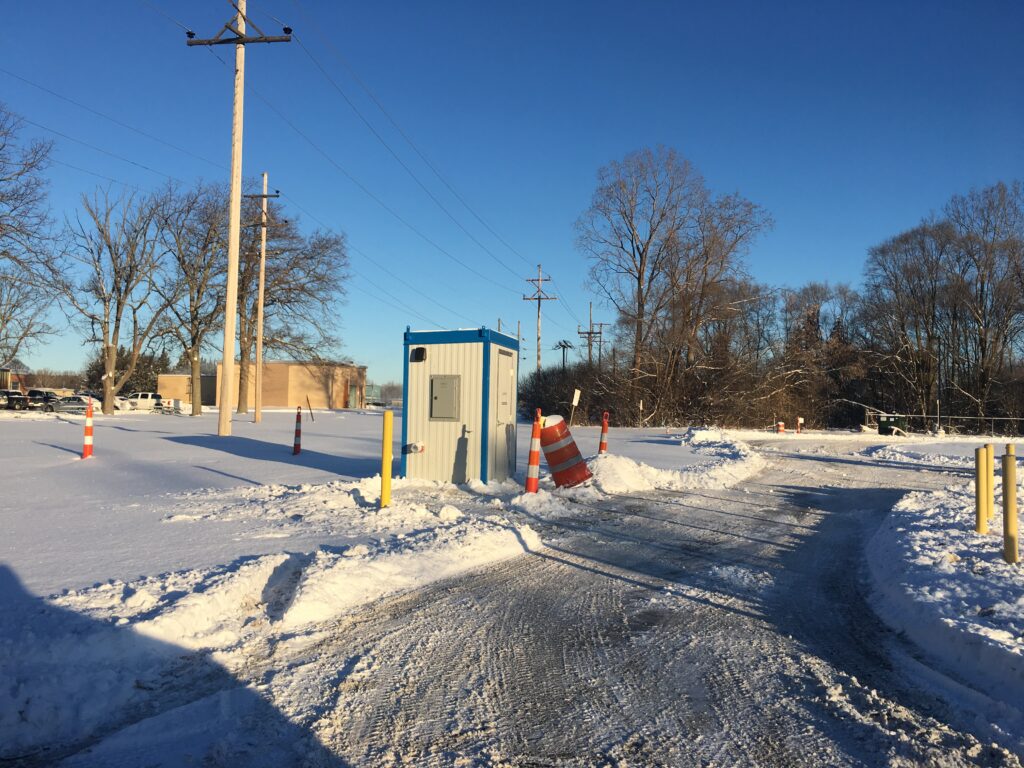
To address these concerns, the team insulated the bulk water station enclosure to prevent heat loss and installed a second heater as a backup inside the station.
The external access terminal uses a steel access box. Additionally, the warm air from the interior circulates over the terminal to provide constant heat to exposed screens and control devices.

In addition, these systems boost revenue by capturing and recording every customer transaction. The software then uses this information to generate invoices, further reducing administrative costs automatically.
In addition to northern climate considerations, the Ninilchik station serves residents and trucking firms. It handles varying volume requirements and features an automated coin operation.
This system will allow users to pay at the station with cash. Simplifying the management of station payments and thus lowering administration costs.
The team upgraded the bulk water truckfill system by installing thicker steel walls at the access terminal. Such upgrades deter vandalism and ensure the security of any onsite payments.
The features built into the Ninilchik location included an automated bulk water truckfill system. Altogether, this allows the municipality to control access by creating customer accounts.
After setup, the system automatically tracks customer usage and generates invoicing information. These features provide monitoring, security, and control over access to the community’s water supply.
These systems also boost revenue by capturing and recording every customer transaction. The software then uses this data to automatically generate invoices and further reduce administration costs.
Northwestern US: Crow Reservation, MT
When northern communities such as the Crow Reservation, MT, select a bulk water dispensing system, they can choose from a simple access terminal added to an existing municipal system to a standalone, turnkey bulk water dispensing unit that connects to the community’s water source and power.
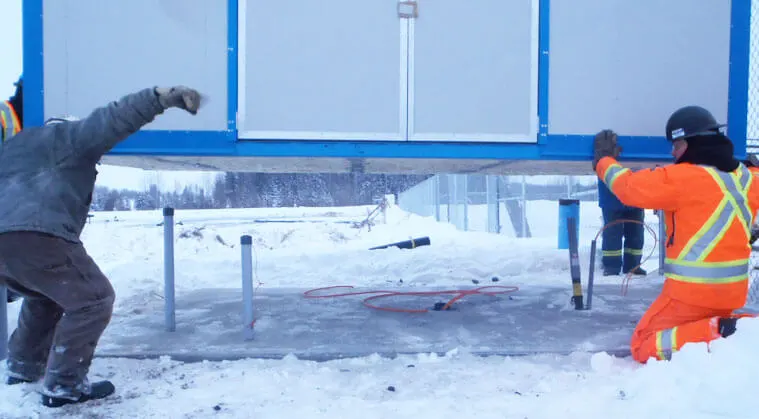
Preassembled systems, like the station in Ninilchik, are factory-tested so they arrive in the community ready to run, making installation straightforward. Suppliers customize modern bulk water dispensing systems to meet each purchaser’s specific requirements.
Operators can tailor flow rates to match customers’ tank sizes. Further, they can design multiple distribution points into a single filling station to serve multiple users simultaneously.
Northern Canada: Whitehorse, Yukon
The climate in Whitehorse, YT, in Canada’s North may require additional insulation, heating, or circulation systems to ensure the system’s reliable operation and safety. Some communities may even opt to install their stations on heated pads to prevent any spilled water from freezing.
A recently constructed station in Whitehorse shows how designs vary by community: it includes different fill-line sizes, protection against weather and freezing, and a chlorine residual monitoring system for all potable water dispensed.
Bulk water stations can include automated data capture and communications capability. Options include cellular, internet, or satellite links, which may vary depending on the community’s infrastructure.
Lessons learned
Successful projects in the North require designs tailored to the specific needs of the communities they serve.
Improving the security of a community’s dispensing system, increasing revenue, and lowering costs are all measures of a successful project.
In remote areas, a single station may service an entire community, so system reliability and the ability to provide continuous access to all users are key factors in system selection.
Successful delivery of these projects depends on careful planning and execution, as well as reliable access to remote technical expertise.
It takes experience working with northern communities and cooperation between clients, engineers, and suppliers to meet these challenges.