Reclaimed Water Station: A municipal playbook for tracing every drop
Water demand is rising while supplies may be becoming more variable due to drought and heat, especially in the South. Many aquifers are stressed. Reclaimed water (i.e., water reuse) gives municipalities a practical way to add reliable capacity without chasing new raw supplies, turning treated effluent into a controlled municipal resource.
Done right, water reclamation can relieve discharge-permit pressure while preserving potable supplies for people — all with account-based access, signed usage agreements, and audit-ready reporting.
But it’s not right for all municipalities.
In this article, we cover:
- Types of reclaimed water or water reuse
- Potential wins from water reclamation stations
- Automated bulk water stations
- When to consider reclaimed water
- When to steer clear
- Why climate matters – storage, seasonality and cold-weather operations
- Overview of the roadmap to a water reclamation program
- Checklist: What success looks like
- Are you considering a reclaimed water station program?
Ready to turn on the tap? Contact Flowpoint.
Or read on to learn the opportunities, pitfalls, and regulatory considerations for reclaimed water.
Types of Water Reclamation and Water Reuse

Though common applications include non-food-contact irrigation, industrial cooling, and process water, there are also construction uses such as concrete mixing, dust control, and selected urban uses. You can be sure there are an infinite number of uses for reclaimed water station applications.
In the United States, states set detailed end-use specifications in compliance with the Safe Drinking Water Act and the Clean Water Act. In the same way, Canadian provinces set end-use requirements, with British Columbia offering one of the clearest exposure-based models. We recommend that you confirm end-use allowances for your region with the EPA REUSExplorer (U.S.) or B.C.’s Reclaimed Water Guideline (Canada).
There are two dimensions to get right: Where the water comes from and what you use it for.
- Sources. Presently, sources are treated municipal wastewater for water reclamation and storm retention ponds for reuse. In some jurisdictions, certain industrial or stormwater streams may be allowed when treatment meets the standard.
- End use. Canada and the U.S. classify these differently. Regulators generally classify end uses by exposure potential. Higher exposure uses require more treatment, tighter monitoring, and stricter access controls. Lower exposure uses still require approvals and traceability, but with a lower risk profile.
Across end-use categories, the common thread is control. For example, Flowpoint provides this via account-based authorization, with precise record-keeping.
Categories of end use:
| Exposure Potential | Typical end uses (Uses/regulations vary by utility/regulator) |
|---|---|
| Higher exposure uses (public contact likely) | Public-facing irrigation Indoor use for toilet/urinal flushing Decorative fountains Surface cleaning of roads |
| Lower exposure uses (no public contact expected) | Process water for power plants Concrete mixing or other construction uses Industrial spray-downs Dust control |
NOTE: At present, this guide covers non-potable reclaimed water. For potable water reuse (IPR/DPR), see the U.S. EPA overview and technical resources or learn about Water Reuse in British Columbia (ISO Committee Paper, 2023).
Potential wins from using Reclaimed Water
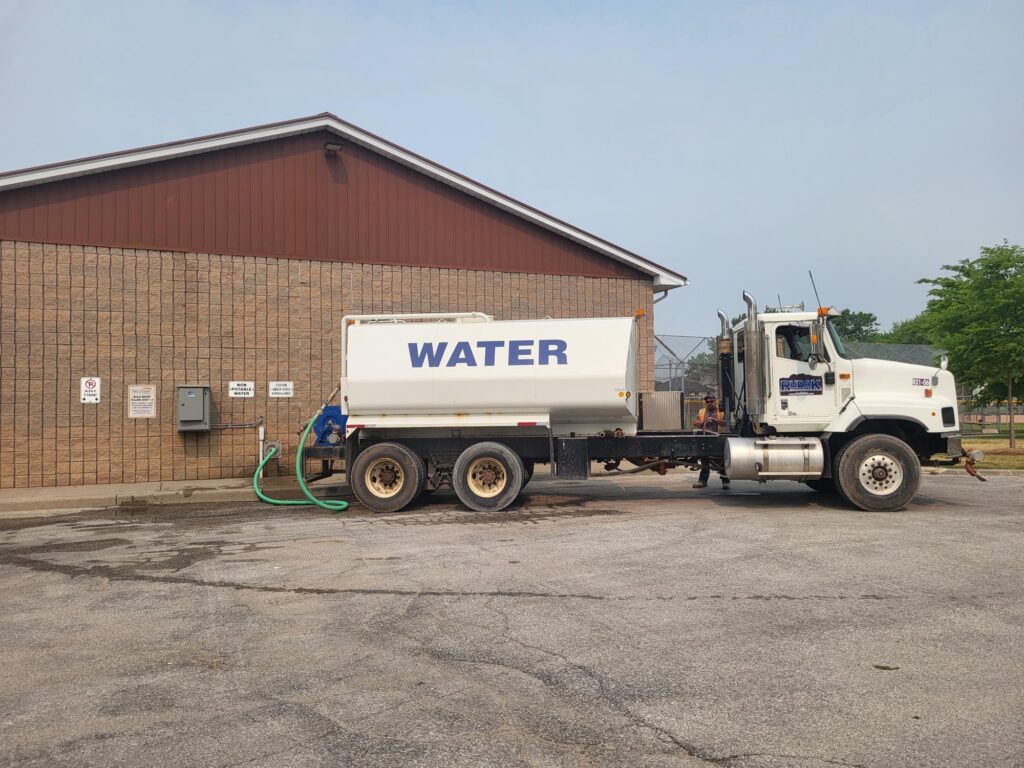
Instead of flowing out of your treatment facility, you can put your reclaimed water to work for you and your municipality.
A water reuse program can:
- Conserve potable water for people while serving irrigation, construction, and other priority demands.
- Provide some level of drought resilience and operational flexibility.
- Add functional capacity and generate revenue, deferring major expansions.
In addition, upgrading to compact biological polishing can help meet tighter effluent targets, unlocking more water reuse options. Learn more about types of wastewater treatment and their potential for reclaimed water use here.
When to consider Reclaimed Water?
Every city, utility, and municipality is unique. What works in one might not work somewhere else.
The following are some situations where water reclamation might be an asset:
- My municipality is growing, and permits constrain my plant. Divert some treated effluent to approved non-potable uses, freeing up capacity and keeping development moving.
- My city has steady non-potable demand. Serve parks, irrigation, dust control, soil compaction, street sweeping, and industrial washdowns from secure and automated bulk water sites.
- My municipality is willing to build infrastructure for safe storage and winterization. Budget for reclaimed water infrastructure, including seasonal/contingency storage and enclosures to keep service reliable.
- My municipality is eligible for financial incentives. There are many federal and state initiatives that fund reclaimed water programs. A few examples include the U.S. EPA Water Infrastructure Finance and Innovation Act (WIFIA), the USDA Water & Waste Disposal Loan & Grant Program, and Canada’s FCM’s Green Municipal Fund.
When to steer clear
In some cases, reclaimed water reuse isn’t the right tool. Programs stumble when planners fail to address public perception, operator capacity, source control, or fit-for-purpose treatment early.
Below are situations where you might want to pump the brakes on planning a reclaimed water program — at least for now.
- My state/province doesn’t clearly allow the uses I need. Without clear end-use rules and regulations, municipalities can’t establish regulatory-compliant approvals, monitoring, or inspections.
- My team is not prepared to manage approvals and access control in either the United States or Canada, where water reclamation is permitted and regulated. POS credit card access bypasses approvals and breaks traceability. If you need account/PIN access and usage agreements, we can provide them.
- My demand is low, and I lack storage space. If you don’t have a place to put it and people don’t want it, reclaimed water isnn’tight for your municipality. However, we can assist you with your storage conundrum here.
Why climate matters — storage, seasonality and cold-weather operations
Cold regions can run reclaimed water programs, but, in some cases, bulk water dispensing (water tipping stations), storage, and operations must be sized and designed for seasonality.
- Plan contingency storage for non-irrigation months.
- Treat frost/snow uses as supplemental.
- Winterize stations (not only heated but also insulated enclosures).
- By implementing a reclaimed and automated bulk water program (water tipping station), you can add continuous online water-quality monitoring at stations serving higher-exposure uses. Monitoring can include disinfectant residual and turbidity. Moreover, you can rest assured that water quality is tracked in real time, with compliance alarms logged.
Overview of the roadmap to a Water Reclamation program
A reclaimed water station works best when the equipment suits your needs. Flowpoint can design and build your custom solution, ensuring it meets your regulatory requirements and enabling you to leverage software with reporting mechanisms to demonstrate compliance to local regulators.
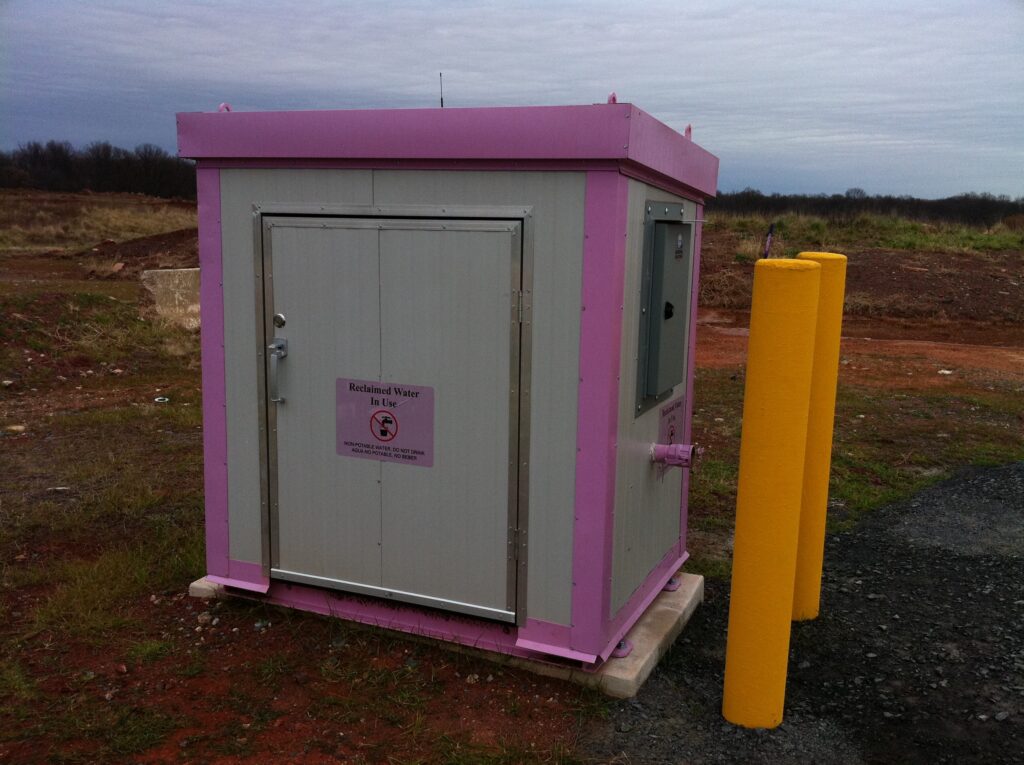
The following is an overview of the process:
- Confirm what’s allowed. Validate end uses and exposure tiers in your jurisdiction. Then map the matching treatment and monitoring requirements, as end-use rules vary by state/province. Confirm allowed uses, monitoring, and record retention in the EPA’s REUSExplorer (U.S.) or the B.C. Reclaimed Water Guideline (Canada) and any other applicable state or government regulations.
- Plan demand and storage. Estimate seasonal demand, size contingency/seasonal storage, and note any winterization needs for your climate.
- Pick sites and hydraulics. Choose pads near users, verify available pressure, and decide whether a booster is needed to keep truck fill times reasonable.
- Plan your access and monitoring. Modern water rules make monitoring and audit trails non-negotiable. Each user signs a usage agreement and approval for specific use types and stations. The system then records user, use type, volume, date/time, station, and destination. Those records are searchable and exportable for audits. For higher-exposure uses, many utilities layer in SCADA and online water-quality parameters.
- Choose your station and rules. Select an engineered-to-order automated bulk water system or water tipping station (ports, enclosure, account access, SCADA/online quality). As well as clear non-potable labeling and purple-pipe conventions to support field compliance.
- Launch, log, and improve. Commission and complete any initial compliance sampling, train operators and haulers, and log user/use type/volume/time/station (and destination if required). Then, review and tune quarterly.
In a few moves, you’ll be set up to meter, monitor, and enforce every drop.
Checklist: What success looks like
Your final reclaimed water program should deliver:
- Potable offset. Save potable water for where it’s needed.
- Capacity relief. Reduce the need for expensive capacity upgrades.
- Regulatory compliance. Tracking water reuse and being audit-ready.
- Performance. Both high uptime and fast fill rate.
- Quality control. Monitoring where needed.
- Adoption plan. Communication, active accounts, and training.
- Financial Planning. As a result, you can plan for fee schedules to generate net revenue.
- Seasonal management. Storage, winterization.
With the right design, data, and dispensing technology, Flowpoint helps you check every box. As a result, your reclaimed water program becomes a lasting success.
Build it like Austin: Access control, compliance, and capacity
Want to know more about what success looks like?
In Austin, Texas, USA, their reclaimed water program now spans more than 50 miles of “purple pipe” and saves millions of gallons of potable water each year.
Learn how Austin used reclaimed water to address water scarcity challenges, providing secure, accountable access for municipal, commercial, and construction uses.
So, are you considering a water reclamation program with an automated bulk water station?
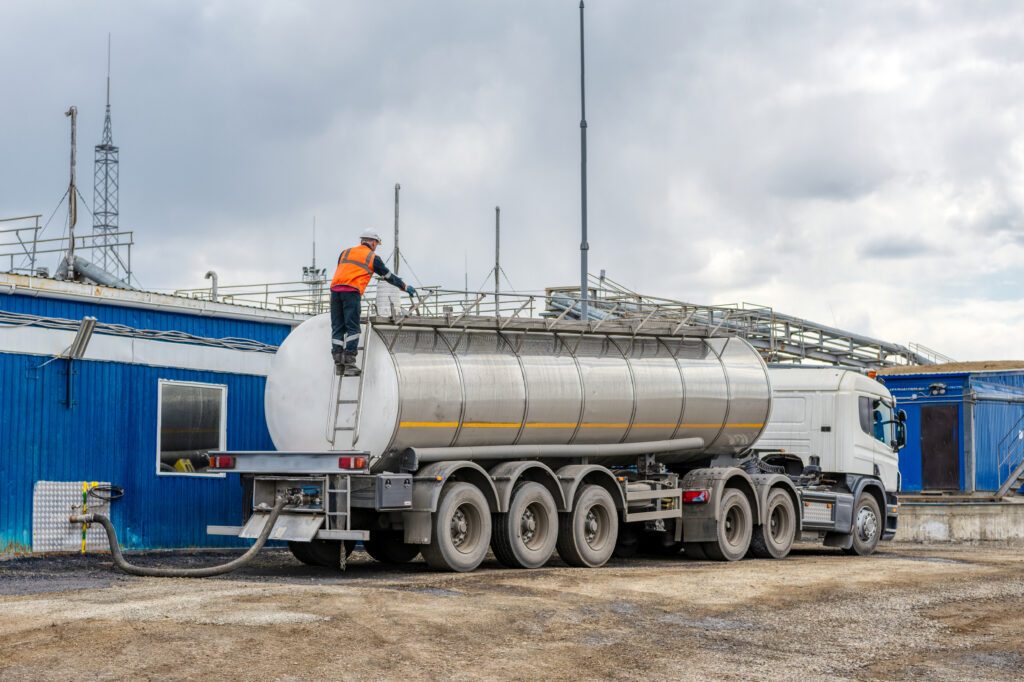
If you’re not using reclaimed water, you have an unused resource at your disposal.
Flowpoint designs turnkey automated bulk water dispensing stations (water tipping stations) specifically for reclaimed water. We give you levers that regulators expect:
- Access control by use type.
- Metering.
- Remote monitoring.
- Optional online quality.
- Clean records for audits.
Above all, you want your reclaimed water done right. Therefore, we offer:
- Experience. We’ve been doing reclaimed water since before it was cool. Flowpoint has more than 30 years of experience successfully helping engineering firms, municipalities, developers, and utilities plan and implement their water and wastewater solutions. Given that we have over a thousand stations all over North America, chances are there’s already one near you.
- Customization. Our systems are factory-assembled, fully customizable, and designed for easy onsite installation. We can customize configurations, including pipe diameter, PSI, number of fill stations, and connection types (quick connect, camlock, etc.).
- Robust traceability. Our automated bulk water stations (water tipping stations) and Water+™ Software offer outstanding traceability for regulatory compliance.
- Customer support. We also offer a support helpline to answer all your questions as you roll out your program quickly.
- Warranty. We offer an industry-leading 5-year station warranty.
It’s important to realize that whoever you use for your reclaimed water station will be working with them for years to come.
Contact the company with decades of experience. We’ll get your reclaimed water program up and running.