How AI and Cloud Software Are Transforming Municipal Water Technology
Municipal water systems and their associated technology are under more pressure than ever. Aging infrastructure, increasing regulatory requirements, limited staffing, and rapid population growth are forcing utilities to rethink how they manage water and wastewater operations. Enter smart water systems to reduce the burden. The solution isn’t just new equipment—it’s smarter systems overall. Smart water management, powered by cloud software, automation, and artificial intelligence (AI), is transforming how municipalities operate. What was once reactive and manual is becoming proactive, connected, and data-driven. Flowpoint initially recognized this trend when they began deploying software managing septage and bulk water operations for their customers.


Introduction to Smart Water Systems
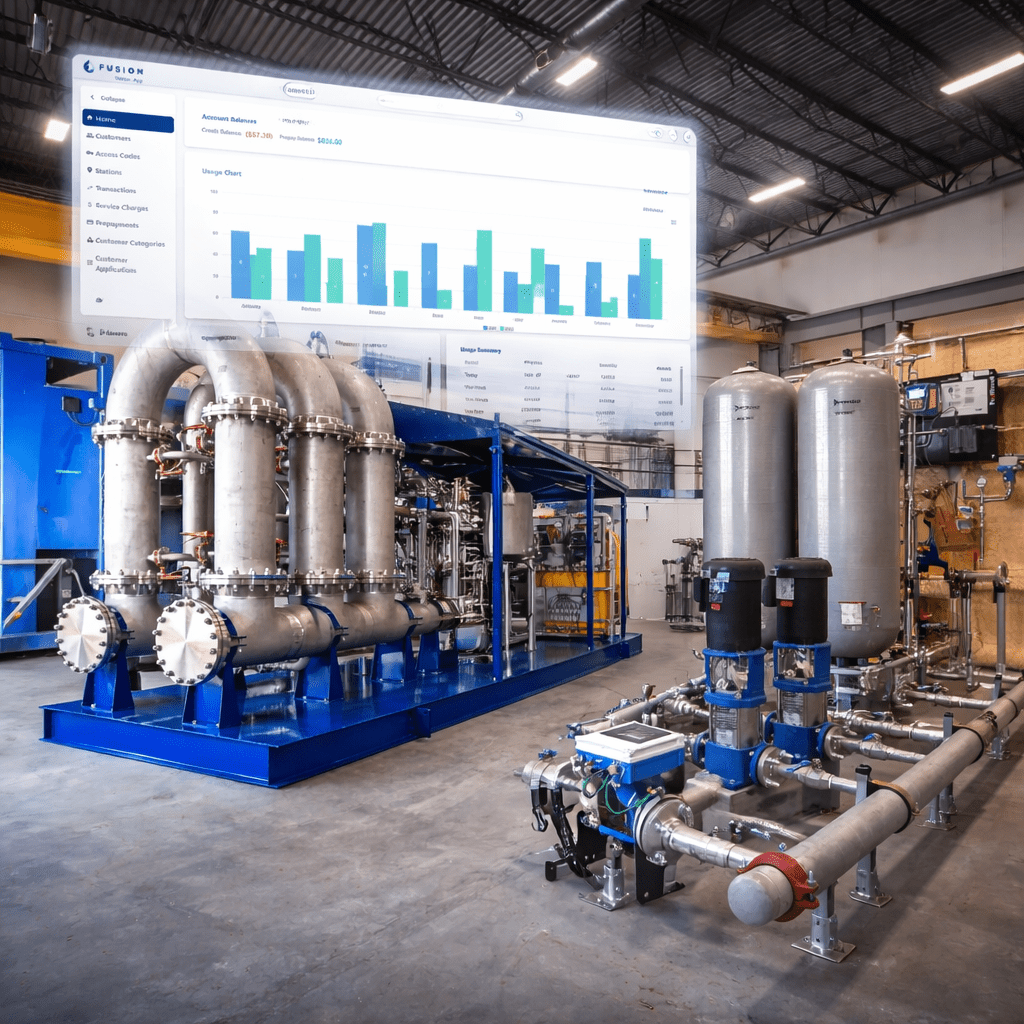
A smart water system integrates physical infrastructure—such as treatment systems, pump stations, septage receiving, and bulk water facilities—and, when integrated with sensors, cloud platforms, and analytics software, provides municipal water technology. Instead of relying on spreadsheets, manual logs, or disconnected systems, operators gain real-time visibility into:
- Water usage and demand trends
- System performance and pressure conditions
- Equipment health and maintenance needs
- Billing, reporting, and compliance data
Platforms like Flowpoint’s Water+ and Septage+ bring all of this into a centralized interface, allowing operators to equally monitor, control, and optimize their systems from anywhere.
The Problem with Traditional Water Management
Many organizations still rely on outdated municipal water technology that limits efficiency and increases risk, for example:
- Manual meter readings
- Paper-based reporting
- Limited system visibility
- Reactive maintenance
This approach creates blind spots. Issues like leaks, pressure loss, or equipment failure often go undetected until they become costly problems. It also places a heavy burden on already stretched teams—forcing operators to spend more time managing data than improving operations.
The Role of AI in Smart Water Management
Predictive Analytics and AI
How AI Is Changing Water Operations
Undoubtedly, Artificial Intelligence is enabling water systems to move from reactive to predictive.
Predictive Maintenance
AI analyzes historical and real-time data to detect patterns that signal potential failures. Instead of reacting to breakdowns, operators can schedule maintenance before issues occur.
Leak Detection and Loss Prevention
Smart water systems identify anomalies in flow and pressure data, further helping detect leaks faster and reduce non-revenue water.
Demand Forecasting
AI can predict usage patterns and demand spikes, further allowing utilities to optimize pumping, storage, and distribution.
With this purpose in mind, the system doesn’t just respond to problems—it anticipates them.
The Role of Cloud-Based Software
Cloud platforms are becoming the foundation of modern smart water systems.
Automation and Efficiency
Real-Time Monitoring
Operators can access live system data from anywhere, eventually improving response times and operational awareness.
Automated Reporting
Compliance becomes easier with automated reporting tools that reduce administrative workload.
Centralized Smart Water Systems – Consider Software for Managing Bulk Water Operations
Multiple assets—such as bulk water stations or pump systems—can be managed from a single platform. This level of visibility and control simply isn’t possible with traditional, disconnected systems.
Why Cloud SaaS Beats Traditional Client-Server Software
As municipalities evaluate digital solutions, one of the most common questions is:
“Why pay for a subscription instead of buying software outright?”
It’s a reasonable question—but it overlooks the true cost of traditional software.
Cloud Software’s Impact on Smart Water Systems
The Hidden Costs of On-Premise Systems
Client-server software may appear cheaper upfront, but it comes with significant long-term responsibilities. Municipalities must manage:
- Servers and infrastructure
- Cybersecurity and backups
- Software updates and patches
- IT staffing and support
- Downtime, failures, and recovery
In addition, this means you’re not just buying software—you’re taking on the full cost and risk of running it.
Cloud SaaS: Paying for Outcomes, Not Overhead
Cloud-based SaaS platforms eliminate that burden. Instead of managing systems internally, municipalities subscribe to a smart water management solution where the provider handles:
- Hosting and infrastructure
- Security and compliance
- Continuous updates and improvements
- Data protection and recovery
This allows operators and leadership to focus on water operations rather than solely on IT management. More importantly, SaaS ensures your system is always up to date. Conversely, you’re no longer stuck with outdated software that requires expensive upgrades every few years.
The Total Cost of Ownership Advantage
The idea that SaaS is “more expensive” doesn’t hold up when you look at the total cost of ownership over time.
No Large Upfront Capital Costs – Consider Software Managing Septage Operations
SaaS eliminates the need for major capital investment in hardware and licensing.
Reduced IT Overhead
Moreover, there’s no need to maintain servers or dedicate internal resources to software management.
Built-In Scalability
Smart water systems scale as your needs grow—without overbuilding infrastructure.
Continuous Updates (No Upgrade Costs)
New features, improvements, and security updates are delivered automatically.
Predictable Budgeting
Subscription pricing replaces unpredictable repair, upgrade, and replacement costs with a consistent operating expense. When viewed over a 3–10 year period, SaaS is often not just competitive—it’s more cost-effective.
Subscription Is Not an Upsell—It’s Risk Reduction
Framing SaaS as an “upsell” generally misses the point. A subscription model is about reducing risk and improving outcomes. When leveraging SaaS, municipalities gain:
- Greater system reliability
- Reduced downtime and failures
- Stronger security and compliance
- Protection against obsolescence
With traditional software, the risk sits entirely with the municipality. Saas significantly reduces the associated risks—and is shared with a provider whose job is to keep the system running at peak performance.
Benefits of Smart Water Systems
When AI and cloud software are combined with modern infrastructure, the impact is significant:
Increased Efficiency
Automation not only reduces manual work but also improves productivity. Most septage and bulk water operations teams are managing via pen and paper today; a software upgrade would reduce unnecessary work.
Improved Revenue Capture
Simultaneously track and bill every drop of water, ensuring that all water used and wastewater received are accurately accounted for.
Better Compliance
Real-time data and reporting tools simplify regulatory requirements.
Smarter Decision-Making
Data-driven insights support both better planning and investment decisions.
Overcoming Adoption Barriers
Some municipalities hesitate to adopt smart systems due to concerns about cost, integration, or training. However, modern solutions are designed to integrate with existing infrastructure and scale over time. Implementation can be phased—starting with high-impact areas and expanding as needed. As a result, you experience a smoother transition with immediate operational benefits.
Conclusion: The Future of Smart Water Management
Unquestionably, smart water systems are no longer a future concept—they’re quickly becoming the standard. As infrastructure ages and demands increase, municipal water technology specifically needs to be:
- More efficient
- More resilient
- More adaptable
For example, modernizing your Septage and Bulk Water with software managing your operations.
By combining modular infrastructure, AI-driven insights, and cloud-based software, utilities can reduce costs, improve service, and future-proof their operations. The question is no longer whether to adopt smart water systems. It’s how quickly you can implement them.