
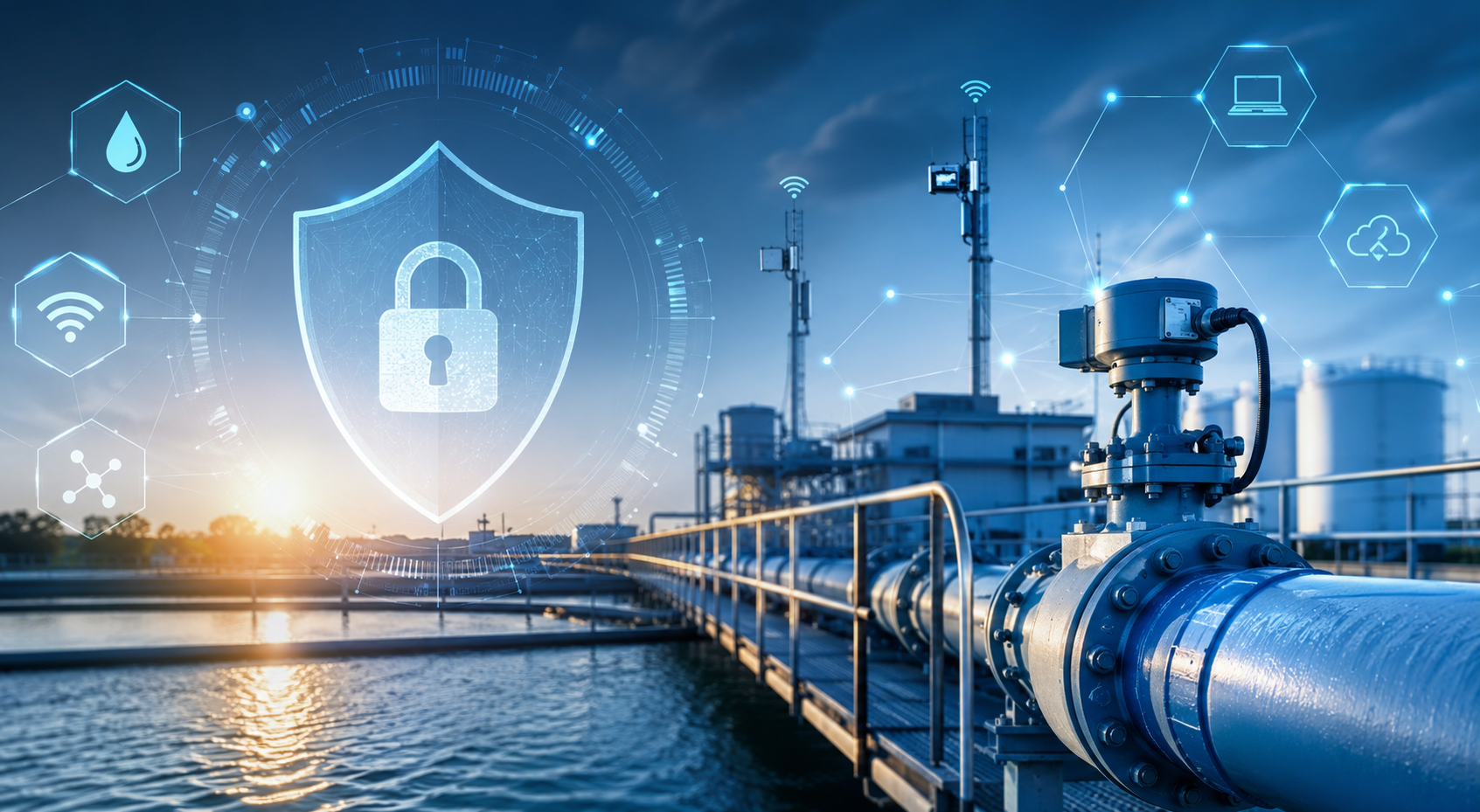
Why Cybersecurity Matters for Connected Water and Wastewater Systems
Modern bulk water vending systems (water dispensing technology), septage receiving terminals, and remote utility infrastructure have evolved far beyond simple mechanical equipment. What was essentially just a physical asset protected by locks, fencing, and weatherproof housing is now part of a connected water systems operational technology (OT) environment that requires cybersecurity insights. Today’s systems not only exchange data, but also communicate remotely, integrate with business platforms, and provide real-time insight. While these capabilities deliver significant operational benefits, they also introduce a new reality: threats no longer need to be physically present to disrupt operations.
As per the Canadian Centre for Cyber Security, “We’ve seen an unmistakable shift in recent years. Cybercriminals are more sophisticated, state-sponsored actors are more willing to target essential services, and disruptive tools are easier to access. Water systems now face a threat landscape they were never designed to withstand.”
For municipalities, utilities, industrial facilities, and engineering firms, cybersecurity has become just as important as physical security. When evaluating connected infrastructure, organizations are increasingly asking questions about IoT security, OT security, secure communications, remote access, software updates, authentication, and long-term cybersecurity support. These are no longer “IT questions.” They are operational questions.
The Evolution from Physical Security to Cybersecurity
Historically, protecting a water or wastewater station (for example, bulk water vending systems and septage receiving terminals) meant preventing unauthorized physical access. Operators focused on:
- Manual locking methods
- Environmental protection
- Tamper-resistant hardware
- Electrical safety
- Mechanical reliability
Presently, these remain essential. However, today’s connected infrastructure creates an entirely different attack surface. Remote monitoring, cloud connectivity, cellular communications, wireless networking, and integrated SCADA systems create opportunities for efficiency—but they also require a layered cybersecurity strategy.
A secure box may prevent someone from opening a control panel, but it does nothing to stop a threat from gaining unauthorized access through a network connection hundreds or even thousands of miles away. That is why modern infrastructure must be designed with both physical security and cybersecurity in mind.
Why Cybersecurity Questions Are Becoming Standard
Organizations using connected infrastructure are becoming increasingly sophisticated. Security administrators, IT departments, compliance teams, and engineering consultants routinely evaluate vendors using detailed cybersecurity questionnaires before approving new equipment. Common topics include:
Secure Remote Access
Organizations want to know:
- How the system controls remote access
- Whether the system uses protected communications
- How the system manages user authentication
- Whether the system controls and audits access
Remote connectivity should never come at the expense of security.
Software Updates and Patch Management
A connected water systems device requires ongoing maintenance throughout its useful life. Generally, questions often include:
- How the system delivers firmware updates
- Whether updates are digitally verified
- How the system resolves security vulnerabilities
- How long will support be provided for the software
Cybersecurity is not a static design feature—it is an ongoing process.
Authentication and Access Control
Strong authentication is now expected. Customers increasingly look for features such as:
- Role-based access control
- Strong password policies
- Multi-factor authentication where appropriate
- Least-privilege user permissions
- Account auditing and logging
These controls reduce the likelihood of unauthorized access while providing accountability, which is key for unmanned and automated stations such as bulk water vending systems and septage receiving terminals.
Secure Communications
Data moving between field equipment and remote systems should be protected against interception and tampering. Modern connected infrastructure should incorporate secure communication practices, including encrypted protocols and trusted networking methods, to protect operational data while maintaining system reliability.
OT Security Is Different from Traditional IT Security
Moreover, one of the biggest misconceptions is that traditional IT security alone can protect industrial infrastructure. Operational Technology (OT) has different priorities. While enterprise IT often focuses on confidentiality, OT environments prioritize:
- System availability
- Operational reliability
- Safety
- Continuous operation
- Process integrity
Water and wastewater operations cannot simply be turned on and off during business hours due to a software issue. Industrial cybersecurity solutions must protect against evolving threats while maintaining the operational continuity that critical infrastructure depends on. This is why OT security requires specialized expertise that bridges engineering, industrial automation, networking, and cybersecurity.
IoT Security Is Now Part of Utility Operations
As more field devices become connected, Industrial Internet of Things (IIoT) security has become a particularly critical component of infrastructure planning. Connected water systems often include:
- Sensors
- Flow meters
- Controllers
- Cellular routers
- Remote monitoring devices
- Cloud-connected interface
- Mobile applications
Each connected component represents another system that must be secured. Effective IoT security considers device authentication, encrypted communications, secure firmware, use management, vulnerability monitoring, and secure configuration—not simply via the internet.
Cybersecurity Is a Lifecycle Commitment
One of the most important concepts organizations now recognize is that cybersecurity is never “finished.” Threats evolve. Security researchers continually identify new vulnerabilities. Technology changes. Unquestionably, a secure solution requires continuous attention throughout its useful life. This includes:
Risk Assessments
Regular evaluations help identify changing threats and ensure security controls remain effective.
Vulnerability Management
An established vulnerability management process should not only assess known vulnerabilities but also prioritize and resolve them.
Secure Software Development
Modern industrial software should be developed using secure coding practices and routinely evaluated for security weaknesses.
Incident Preparedness
Organizations should develop and maintain an incident response plan that enables them to identify, communicate, and resolve cybersecurity incidents effectively.
Choosing a Solution Provider That Understands Both Worlds
When evaluating connected water or wastewater systems, cybersecurity should not be viewed as a choice. The most effective solution providers understand both sides of the equation. They recognize that successful infrastructure must deliver:
- Reliable mechanical performance
- Robust electrical design
- Safe operational practices
- Secure networking
- Secure remote connections
- Long-term cybersecurity support
Engineering expertise without cybersecurity knowledge leaves too much risk. Likewise, cybersecurity knowledge without understanding industrial operations may produce solutions that aren’t reliable or usable. The best partners bring both disciplines together.
The Future of Connected Infrastructure Is Secure by Design
Undeniably, digital transformation continues to reshape municipal and industrial operations. Remote monitoring, predictive maintenance, operational analytics, and connected infrastructure offer tremendous opportunities to improve efficiency and reduce operating costs. However, every new connection also requires careful cybersecurity planning.
Organizations should seek solutions built with cybersecurity, IoT security, and OT security as foundational design principles—not afterthoughts. The future of water and wastewater infrastructure depends on protecting both the physical assets that operators can see and the digital systems that are increasingly targeted by threats from anywhere in the world. Choosing a provider with expertise in both physical infrastructure and cybersecurity helps ensure connected water systems remain reliable, resilient, and secure for years to come.
Connected Water System Cybersecurity FAQs
What is OT security in connected water and wastewater systems?
Operational Technology (OT) security refers to protecting the industrial equipment, control systems, sensors, and automation used to operate water and wastewater infrastructure. Unlike traditional IT security, which focuses on protecting business data, OT security prioritizes the availability, reliability, and safety of critical infrastructure. A strong OT cybersecurity strategy helps prevent unauthorized access, service interruptions, and operational disruptions, ensuring that water and wastewater systems continue to operate safely and efficiently.
Why is cybersecurity important for connected utility infrastructure?
As water and wastewater infrastructure becomes more connected through remote monitoring, cloud services, network communications, and Industrial Internet of Things (IIoT) devices, the risk of cyberattacks increases. Obviously, this means that modern threats no longer need physical access to a facility to attempt unauthorized access. Cybersecurity protects connected infrastructure with secure communications, controlled user access, monitoring for suspicious activity, and reduced risk of service interruptions or data compromise.
What should municipalities ask when they evaluate connected water systems?
Municipalities should evaluate both the operational capabilities and the cybersecurity posture of any connected water or wastewater solution. Important questions include:
- How does the system secure remote access?
- How does the system protect data during transmission?
- How are software and firmware updates managed?
- What authentication methods does the system use?
- How does the organization identify and resolve vulnerabilities?
- Does the vendor follow recognized cybersecurity best practices?
- How does the system protect customer data?
- What support is available in the event of a cybersecurity incident?
Manufacturers of bulk water vending systems (water dispensing technology) and septage receiving terminals with expertise in both industrial automation and cybersecurity help reduce long-term operational risk.
How do IoT devices affect industrial cybersecurity?
Industrial Internet of Things (IIoT) devices improve insight and operational efficiency by connecting sensors, controllers, meters, and monitoring equipment. However, every connected device also becomes a potential entry point for cyber threats if not properly secured. Effective IoT security includes secure device configuration, encrypted communications, strong authentication, regular software updates, network zones, and ongoing vulnerability management throughout the device lifecycle.
What cybersecurity features should connected water dispensing technology and septage receiving terminals include?
Modern connected water or wastewater systems should be designed with cybersecurity as a core component, not an afterthought. Recommended features include secure user authentication, encrypted communications, role-based access controls, secure remote access, protected software update mechanisms, system logging, network zones, and ongoing security maintenance. As a result, these features work together to reduce cyber risk and maintain reliable operation of critical infrastructure.
What’s the difference between IT security and OT security?
Although they share many cybersecurity principles, IT security and OT security have different objectives. IT security focuses on protecting business systems, networks, and information from unauthorized access and data hacks. OT security focuses on protecting both the industrial equipment and control systems that keep physical processes operating safely and reliably.
In water and wastewater applications, both disciplines must work together. A secure solution requires protecting not only the organization’s information systems but also the operational technology responsible for essential services.
What is defence-in-depth for industrial control systems?
Defence-in-depth is a cybersecurity strategy that uses multiple layers of protection rather than relying on a single security control. For connected industrial systems, this may include physical security, firewalls, encrypted communications, strong authentication, network zones, secure software development, monitoring, and regular security updates. If one layer is compromised, additional controls help protect the system.
Can small municipalities benefit from industrial cybersecurity?
Absolutely. Cyber threats are not limited to large cities or utilities. Smaller municipalities often have limited cybersecurity resources, making it even more important to deploy connected infrastructure that incorporates secure design principles. Investing in cybersecurity helps protect essential services, maintain public confidence, and reduce the risk of costly operational disruptions. Don’t overlook this when considering bulk water vending systems and septage receiving terminals.