
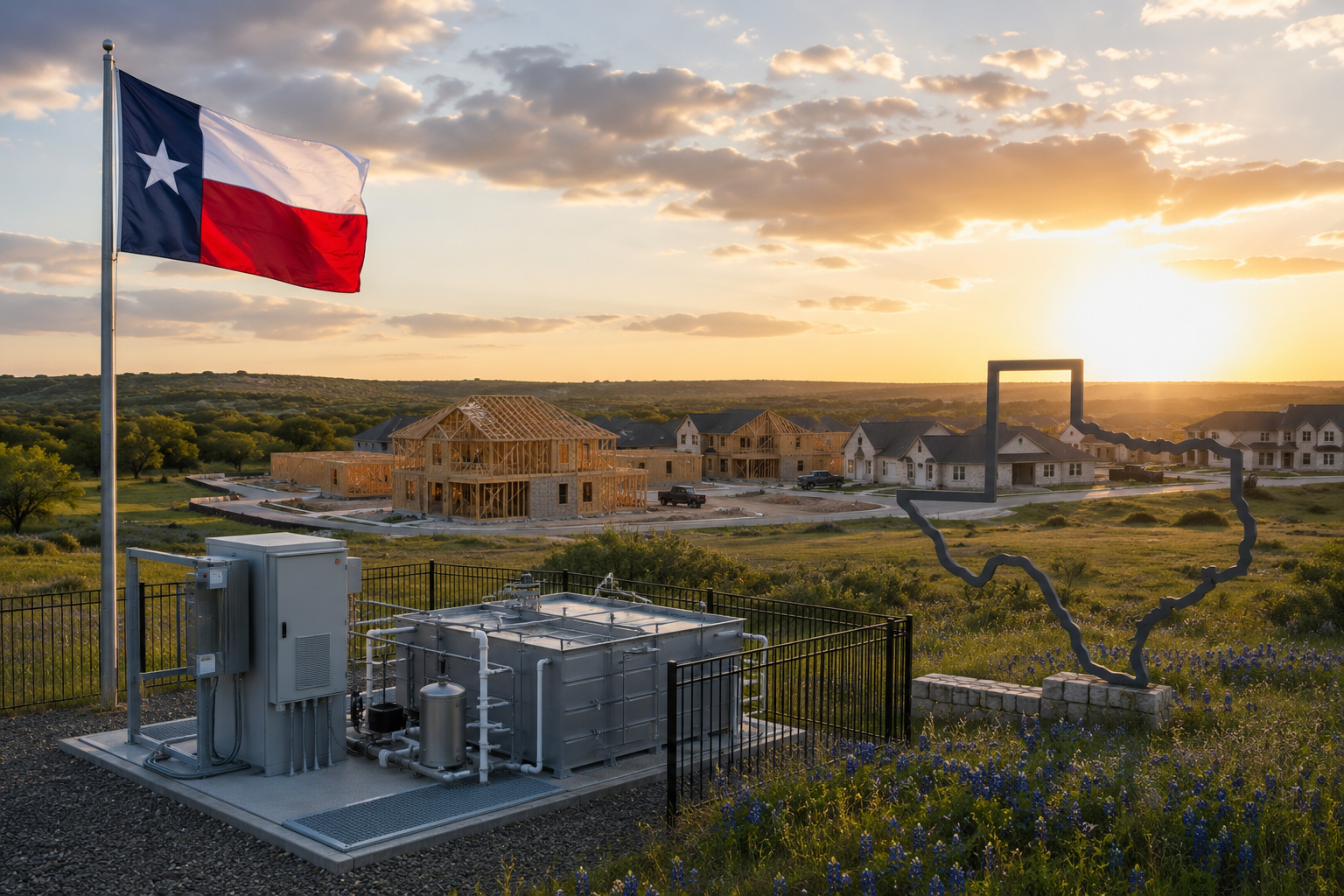

Texas Doesn’t Have a Wastewater Problem. It Has a Wastewater Capacity Problem.
Texas has never been shy about growth. Hundreds of thousands of new residents move to Texas every year. Manufacturers, technology companies, distribution centers, and housing developments reshape communities across Dallas-Fort Worth, Central Texas, and the Gulf Coast. Today, many Texas communities aren’t asking whether they need additional wastewater treatment capacity. They’re asking how quickly they can build it.
Growth is good for business. It fuels local economies, creates jobs, and expands tax bases. Every new neighborhood, industrial facility, and commercial development depends on wastewater treatment. Too often, communities overlook this critical infrastructure until it becomes a bottleneck.
Texas Wastewater Infrastructure Timeline Is Shrinking
The Texas Water Development Board recently estimated that the state will require approximately $174 billion in water and wastewater infrastructure investments over the next 50 years to avoid a severe water crisis. That figure has more than doubled from previous planning estimates, illustrating how rapidly demand is accelerating.
Population growth is only one piece of the equation. Industrial expansion, data centers, semiconductor manufacturing, energy production, and master-planned communities are all placing unprecedented demands on municipal infrastructure. In many fast-growing cities, wastewater capacity has become one of the primary limiting factors for approving new developments.
Communities such as Celina, Anna, and Princeton, as well as other rapidly expanding municipalities, continue to grow. These municipalities are discovering that roads and utilities often outpace traditional wastewater treatment plants. The challenge isn’t simply adding treatment capacity. It’s adding capacity before growth outpaces infrastructure.
Traditional Wastewater Plants Were Designed for a Different Era
Historically, municipalities planned wastewater treatment for decades. Engineers designed large centralized treatment plants around long-term population projections, significant capital investments, and multi-year construction schedules.
Today’s Texas growth doesn’t always allow for that luxury; developments often occur in phases, and industrial facilities may require treatment capacity within months rather than years.
Communities may suddenly need to support thousands of additional homes long before a major plant expansion can be completed. Municipalities can delay residential construction and limit commercial development when they wait years for a conventional expansion. They may also need costly temporary solutions. Modern infrastructure requires a different level of flexibility.
Why Modular Wastewater Treatment Is Becoming More Attractive in Texas
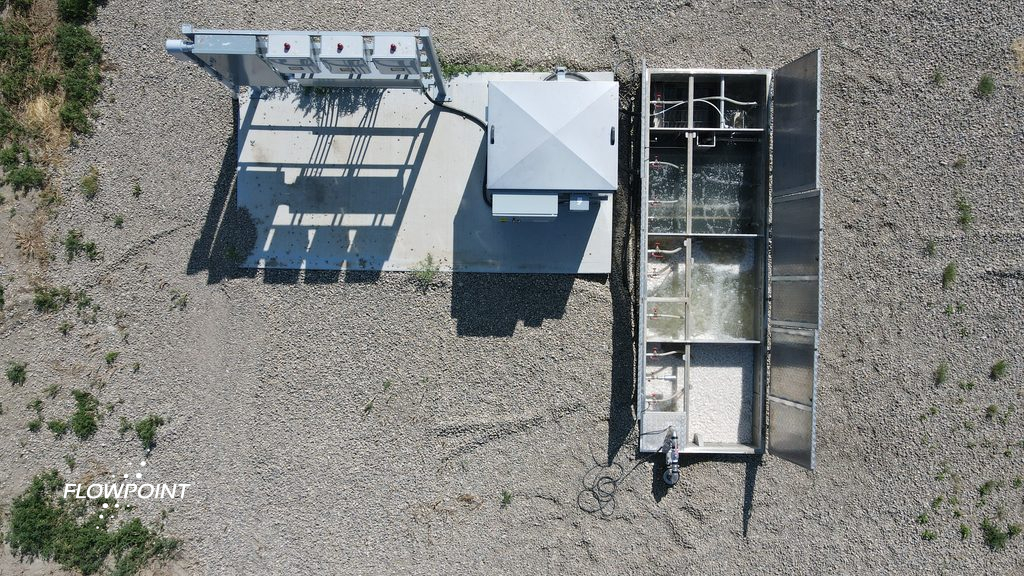
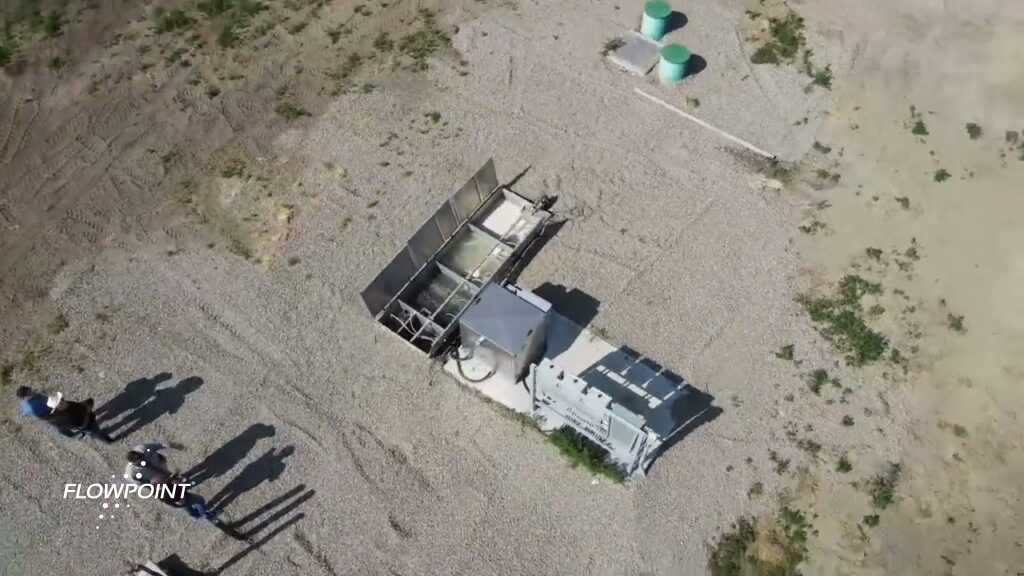
Across Texas, municipalities and developers are increasingly evaluating decentralized and modular wastewater treatment systems that can be deployed alongside community growth. Rather than constructing one massive facility designed for a population decades into the future, modular systems allow capacity to expand incrementally. That approach provides several advantages:
- Faster deployment compared to traditional plant expansions
- Lower initial capital investment for phased developments
- Easier expansion as communities grow
- Reduced land requirements
- Greater flexibility for remote or previously undeveloped locations
Instead of infrastructure dictating when development can occur, modular treatment allows wastewater capacity to grow alongside the community.
Why MBBR Technology Fits Texas Growth
One technology receiving increased attention is the Moving Bed Biofilm Reactor (MBBR). Unlike conventional activated sludge systems, which often require larger footprints and greater operational complexity, MBBR uses engineered carrier media that support high concentrations of beneficial microorganisms within compact reactor tanks. The result is efficient biological treatment within a much smaller footprint.
For municipalities facing land constraints, aging infrastructure, or permit requirements, this offers significant advantages.
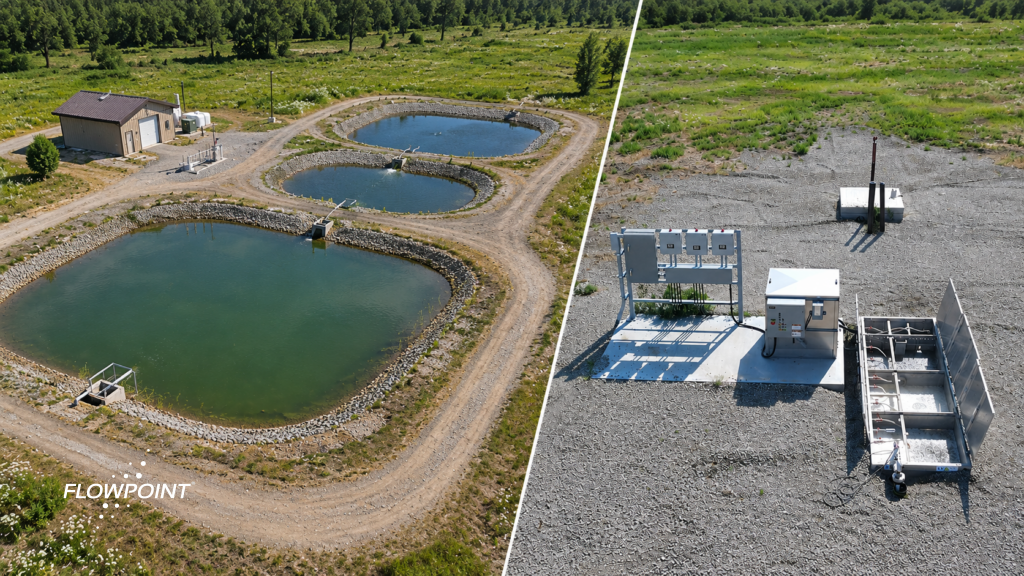
Flowpoint Systems engineers packaged MBBR wastewater treatment plants that can either supplement existing treatment capacity or replace aging systems entirely. Depending on treatment requirements, an MBBR installation can occupy 4 to 10 times less space than traditional lagoon systems, while delivering continuous, high-efficiency treatment with lower maintenance requirements.
Utilities benefit most from that compact design when they have limited room for expansion or need to complete projects quickly.
Supporting Growth While Protecting Texas Waterways
Expanding wastewater capacity isn’t solely about supporting development. It also plays an important role in protecting Texas’ rivers, streams, and aquifers. Communities throughout the Texas Hill Country and other environmentally sensitive regions continue to debate how additional wastewater discharge could affect local waterways.
Concerns over nutrient loading, algae blooms, dissolved oxygen depletion, and watershed protection have become increasingly common as new developments seek discharge permits. These discussions highlight the importance of treatment technologies that consistently meet increasingly stringent permit requirements while minimizing environmental impacts. Modern treatment technologies help communities meet both objectives:
- Support continued economic growth.
- Protect the natural resources that make Texas communities desirable places to live.
Planning for Tomorrow Starts Today
Water infrastructure rarely becomes an emergency overnight. Capacity constraints build gradually until a subdivision cannot receive approvals, an industrial expansion is delayed, or a municipality reaches the practical limits of its existing treatment system.
Recent water supply challenges across parts of Texas—including ongoing concerns in the Corpus Christi region—demonstrate how quickly infrastructure planning can shift from long-term forecasting to immediate action. For many communities, the question is no longer whether wastewater treatment capacity will need to expand. The question is whether expansion can happen quickly enough to keep pace with growth.

Building Wastewater Infrastructure at the Speed of Texas
Texas has always been defined by growth, innovation, and opportunity. Its wastewater infrastructure should reflect those same values.
Moving Bed Biofilm Reactor (MBBR) technology gives municipalities, developers, and industrial facilities a practical way to increase treatment capacity without waiting years for conventional plant expansions. Utilities can deploy packaged systems as new facilities, integrate them into existing plants to increase throughput, or install them as decentralized solutions where centralized infrastructure is not yet available.
As Texas continues to add residents, businesses, and industries at a record pace, wastewater treatment can no longer be viewed as a long-term afterthought. It must become part of the development strategy from day one.
Communities can support future growth and protect the water resources that future generations depend on by investing in scalable, compact, and expandable treatment solutions today.
To learn how Flowpoint Systems’ packaged MBBR wastewater treatment plants help municipalities, developers, and industrial facilities expand treatment capacity in a compact footprint, contact our team for a consultation.
Interested in an MBBR in Texas?
Municipalities or utilities exploring MBBRs — including scalable, above-ground or in-ground solutions — can contact Stephen Barnes for more information.