
Why Flowpoint Focuses on our Septage Receiving Terminal
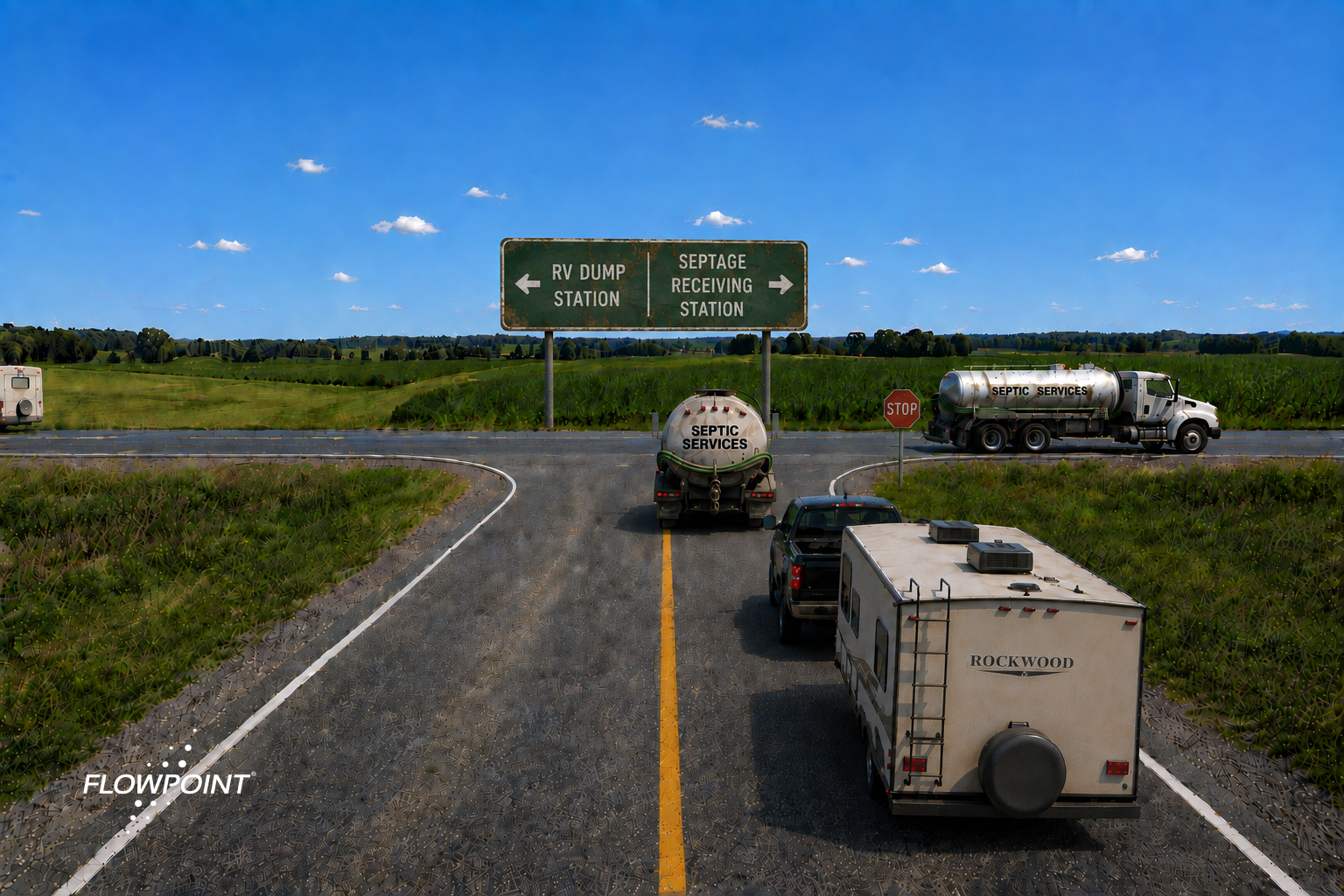
Flowpoint Environmental Systems is frequently contacted by municipalities, campgrounds, recreation facilities, and other organizations seeking an automated RV dumping station. It’s an understandable call to make. However, Flowpoint designs and manufactures an automated Septage Receiving Terminal. An automated RV dump station is essentially the same thing, but on a much smaller scale.
Sometimes the best service we can provide is helping a customer find the right solution—even when that solution isn’t ours.
In practice, however, they are very different applications. For that reason, Flowpoint does not design, manufacture or actively promote an automated RV dumping station. Instead, when a customer has a straightforward RV dumping application, we generally recommend working with a company that specializes specifically in that market.
RV Waste and Septage May Look Similar — But the Applications Aren’t
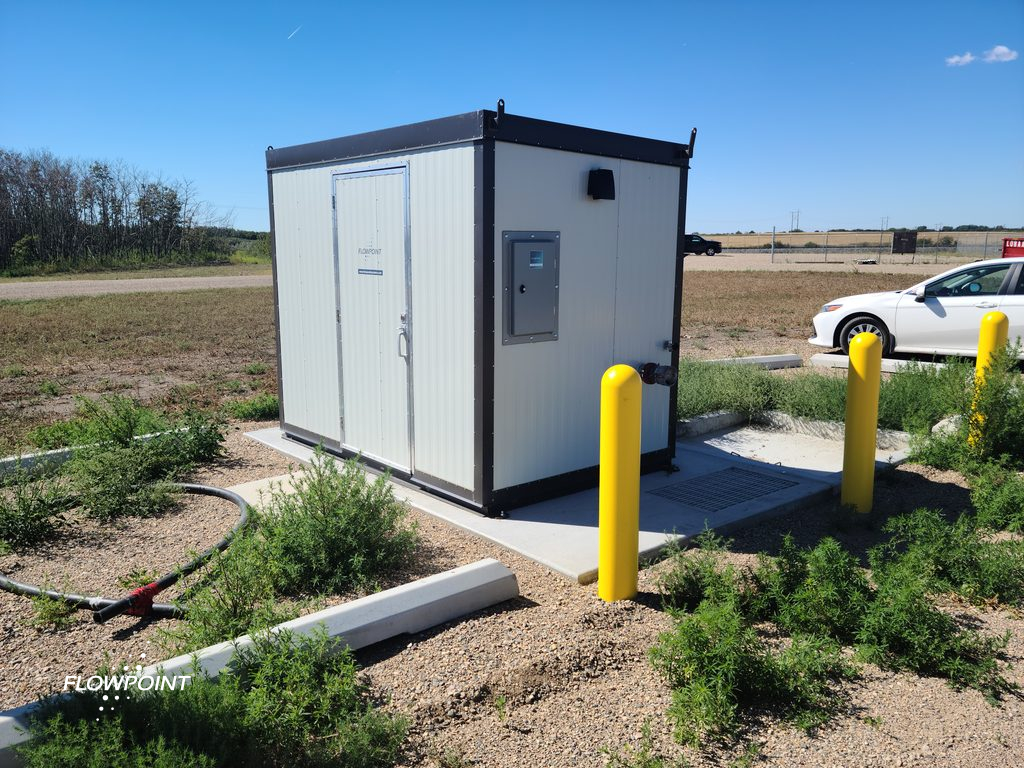
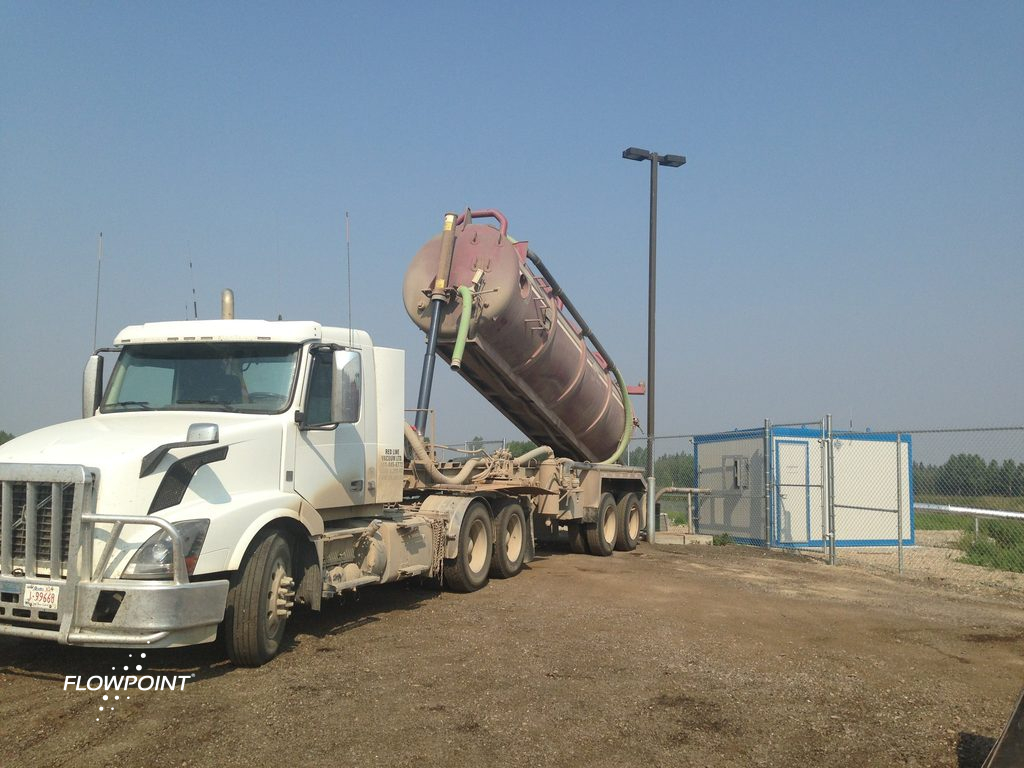
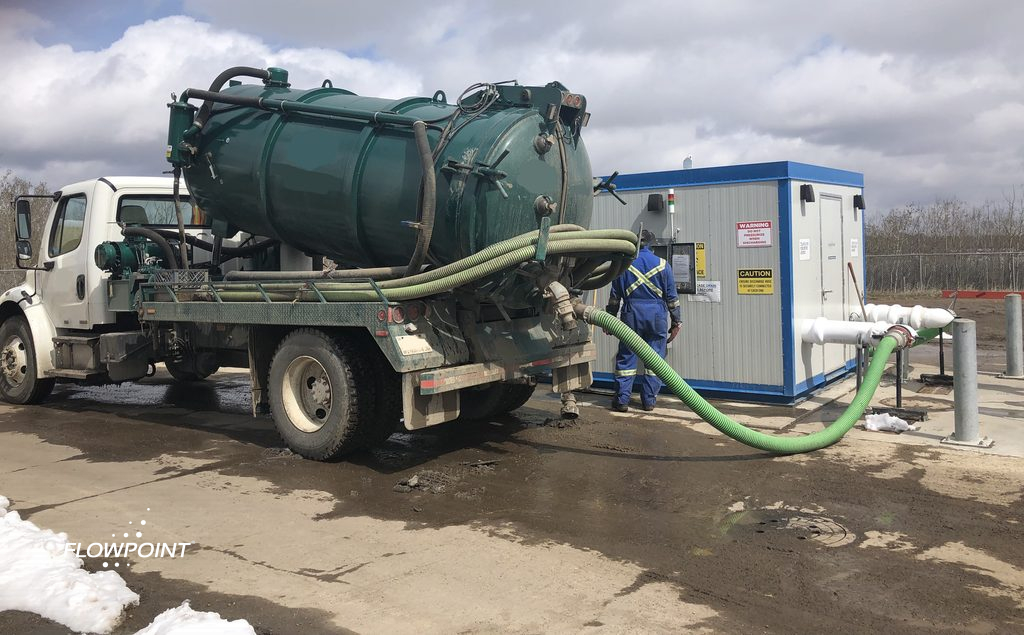
A Flowpoint Septage Receiving Terminal is designed primarily for commercial septage haulers that deliver waste collected from septic tanks, holding tanks, and other wastewater sources. These vehicles can arrive carrying thousands of gallons of material. Depending on the application, that waste can contain significant solids, debris and high-strength organic material. A septage receiving facility therefore needs to do much more than provide access to a sewer.
A Flowpoint station incorporates automated controls with hauler identification, account management, detailed transaction records, valves, and flow measurement. Furthermore, you can integrate heavy object traps, screening, sampling, pH monitoring, and solids handling. Municipalities can establish authorized haulers, track volumes and manage the receiving operation as an integrated part of their wastewater infrastructure. RV dumping presents a very different operating environment.
Small Volumes and Transient Users
An RV typically arrives with a relatively small volume of blackwater and greywater. Unlike commercial septage haulers that may repeatedly use the same municipal receiving facility, RV users are generally transient.
Someone travelling through a community may use the station once and never return. That changes the requirements for automation. A septage station can justify maintaining registered hauler accounts, identifying individual trucks or companies, enforcing municipal disposal rules and maintaining detailed records of substantial wastewater deliveries.
For an RV dump station, the primary requirement is usually much simpler: allow a member of the public to pay a fee, access the dump point, discharge their RV, and continue on their trip. Building a sophisticated septage receiving system around that transaction adds complexity without necessarily adding value.
The Physical Connection Is Different
There is also an important physical difference. A commercial septage receiving terminal uses a controlled hose connection to transfer waste from a vacuum truck into the station.
An RV dump needs to accommodate the flexible gravity sewer hose carried by the RV owner. That means the receiving point generally needs to be located at or near ground level so the RV holding tank can drain by gravity. That arrangement doesn’t lend itself particularly well to the adaptation of a conventional Flowpoint Septage Receiving Terminal.
RV Waste Typically Doesn’t Require a Septage Receiving Terminal
A Flowpoint Septage Receiving Terminal is designed around the realities of commercial septage. Which can include potentially high-strength wastewater, substantial solids and debris, large individual loads and the need to protect downstream wastewater treatment processes. RV wastewater is normally a much smaller and more predictable waste stream.
For many applications, there isn’t a technical justification for installing the screening, instrumentation, controls and other equipment that may be appropriate at a commercial septage receiving facility. The best solution is often the simplest one.
Maintenance Matters Too
A public RV dump station can also be a challenging environment for sophisticated equipment. They may be located at campgrounds, highway facilities, parks or other remote locations. They can experience seasonal operation, limited supervision and widely varying levels of maintenance.
The users are members of the general public rather than professional vacuum-truck operators familiar with a particular receiving facility. For Flowpoint, that creates another important distinction.
Our septage receiving terminal is engineered as municipal and industrial wastewater infrastructure. Designing a more complex system for a relatively simple RV dumping application can increase both capital costs and long-term maintenance requirements. Beyond that, it likely won’t deliver a corresponding operational benefit.
So Who Does Flowpoint Recommend?
When someone contacts Flowpoint specifically looking for an automated RV dumping station, we normally point them to Sani-Star in Bend, Oregon. Sani-Star specializes in automated RV dump fee collection systems. Their equipment is purpose-built around the RV dumping application, including automated payment and controlled access to the sewer connection.
Rather than Flowpoint trying to adapt a septage receiving product to a market it wasn’t designed to serve, we think customers are better served by talking to a company that specializes in exactly what they’re trying to accomplish. For automated RV dumping applications, contact:
Sani-Star
Eric Huffman – Sales
Phone: 541-588-6340
Email: ehuffman@sanistardump.com
Website: www.sanistardump.com
Choosing the Right Tool for the Job
Flowpoint could certainly engineer an automated system that allows RV users to identify themselves, make a payment and discharge wastewater. But being able to build something isn’t necessarily a good reason to build it.
Our focus is on engineering a Septage Receiving Terminal for commercial haulers and municipal wastewater operations. Providing accurate measurement, screening, controls, access management, reporting, and integration with the wastewater treatment system delivers real operational value.
For a municipality receiving commercial septage trucks, that’s where Flowpoint can help. For a campground, park, travel center or municipality simply looking to provide an automated public RV dumping facility, we recommend talking to the specialists at Sani-Star.
Sometimes the best service we can provide is helping a customer find the right solution—even when that solution isn’t ours.