
AUTOMATED ACCESS, COMPLETE ACCOUNTABILITY
Automated Septage Receiving Solution
Know who unloaded, how much they delivered, and what entered your wastewater system. Specifically, Flowpoint combines controlled hauler access, accurate load tracking, automated records, pretreatment options, and cloud-based management into one completely automated septage receiving solution. Whether you need a new receiving facility or want to upgrade an existing process, we can help bring greater accountability to your operation.
Security
Control which haulers can access your receiving facility.
Trackable
Record each load, hauler, volume, date, and time.
Protection
Identify and manage material before it reaches your treatment process.
Oversight
Reduce paperwork while improving billing and reporting.
Management
Manage haulers, stations, and transaction records through one platform.

BETTER OVERSIGHT FROM ARRIVAL TO TREATMENT
Take Control of Your Septage Receiving Process
Wastewater facilities need to accept hauled waste without losing control over who enters the site or what they unload. However, many facilities still rely on paper manifests, shared access credentials, manual meter readings, or staff-supervised receiving. As a result, load records can be incomplete, billing can become inconsistent, and operators may have little information about incoming material.
For this reason, an automated septage receiving solution brings these separate activities into one controlled process. First, the system identifies the hauler, confirms access, measures the load, and records the transaction. It then provides staff with the information needed for billing and reporting. Depending on the application, the process can also include sampling, screening, grinding, and contaminant monitoring. In turn, haulers receive convenient access while treatment facilities gain better visibility and control.

MANUAL PROCESSES CREATE OPERATIONAL RISK
Is Your Current Receiving Process Working Against You?
Manual and outdated receiving processes can create problems for operators, administrators, haulers, and downstream treatment equipment. Hauled waste can include domestic sewage, non-domestic waste, or a combination of both. Therefore, facilities need a reliable way to identify haulers, document loads, and maintain control over their hauled waste receiving process. For example, common challenges include:
- Unknown or unauthorized haulers entering the site.
- Shared credentials with limited accountability.
- Paper manifests and handwritten load records.
- Inaccurate load volumes and invoices.
- Staff time spent supervising routine unloading.
- Delayed billing and administrative reporting.
- Limited access outside staffed operating hours.
- Difficulty connecting a load to its hauler or generator.
- Rocks, rags, grease, and other debris entering the process.
- Limited information about unusual or contaminated loads.
- Aging controls that are difficult to maintain.
- Disconnected access, receiving, billing, and reporting systems.
Over time, these problems become harder to manage as the number of haulers and loads increases. Automation creates a consistent receiving process for every hauler and transaction. It also gives facility staff a more reliable record of what they received.
What Should an Automated Septage Receiving Solution Provide?
A complete septage receiving solution does more than open a valve. In other words, it connects site access, unloading, measurement, pretreatment, transaction records, and administration.
Controlled Hauler Access

Authorize which haulers can enter the facility and when they may unload. Individual credentials also link station activity to the correct customer or vehicle.
Accurate Load Tracking
Specifically, record the hauler, volume, date, time, receiving point, and other relevant information for each transaction.
Automated Billing Records
Use recorded load information to support invoicing and reduce manual entry. Staff can also apply rates and fees according to the facility’s requirements.
Pretreatment and Process Protection
Use rock traps, grinders, screens, separators, or other equipment to manage debris and solids before they reach downstream treatment equipment.
Sampling and Monitoring
Collect representative samples and connect them to individual transactions. Depending on the application, monitoring may include pH, conductivity, hydrocarbons, or other selected parameters.
Remote Management
Review station activity, manage hauler accounts, adjust permissions, and access reports without travelling to the receiving site.
ONE SOLUTION, BUILT AROUND YOUR FACILITY
New Stations, Retrofits, and Modernization
Not every wastewater facility begins with the same infrastructure or receiving process. For instance, some facilities need a complete receiving station with integrated pretreatment. Others already have usable piping and equipment but need improved access control, measurement, communications, or software.
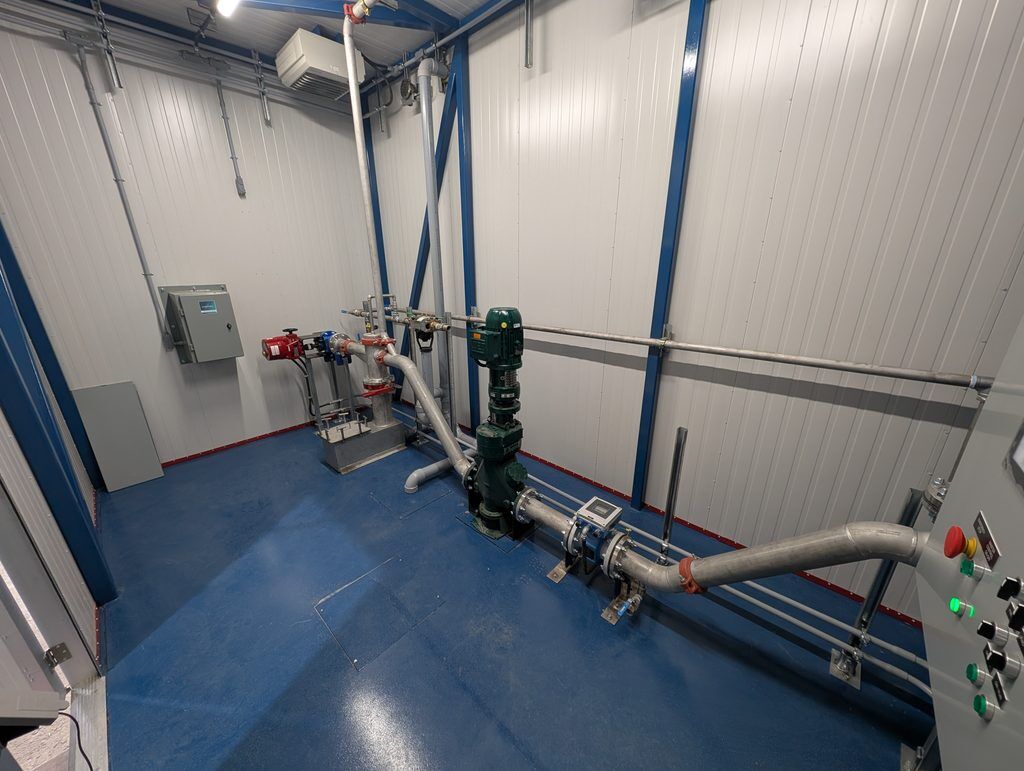
- Build a New Septage Receiving Facility: Create a complete receiving process around your required connection sizes, flow rates, unloading points, site conditions, and treatment requirements. Depending on the project, a new system can include an enclosure, piping, flow measurement, access terminal, controls, communications, sampling, pretreatment, and software.
- Automate an Existing Receiving Process: Add controlled access, transaction tracking, and software to infrastructure that still has useful service life. As a result, a retrofit can improve accountability without requiring the facility to replace every existing mechanical component.
- Modernize Aging Equipment: Replace obsolete controls, access terminals, communications, or monitoring equipment through a targeted or phased upgrade. In this case, Flowpoint can evaluate the existing system and help determine which components can remain in service.
- Expand a Current Operation: Add haulers, unloading points, pretreatment equipment, sampling capabilities, or additional receiving locations as demand grows. Accordingly, Flowpoint can help you choose the approach that best fits your facility, treatment process, and long-term goals.
HARDWARE, SOFTWARE, AND SUPPORT
How the Complete Flowpoint Solution Works
Each part of an automated septage receiving system has a specific role. Together, they create a more controlled and accountable receiving process.
- Identify the Hauler: First, the hauler signs in at the access terminal using an authorized credential.
- Confirm Access: Next, the system checks the hauler’s permissions and account status before allowing the unloading process to begin.
- Receive and Measure the Load: The station controls the receiving process and records the volume of septage delivered.
- Protect the Treatment Process: When required, integrated equipment can trap debris, reduce solids, collect samples, or monitor selected load characteristics.
- Record the Transaction: The system links load information to the correct hauler, customer, vehicle, date, and time.
- Manage the Information: Authorized staff can review activity, manage accounts, prepare reports, and support billing through Septage+ software. The station controls site access and septage receiving. Meanwhile, Septage+ gives staff one centralized platform to manage haulers, transactions, rates, reports, and operating information.
FIND THE RIGHT NEXT STEP
Explore Our Complete Automated Septage Receiving Solution
First, learn about the equipment and then compare Flowpoint’s complete stations, retrofit access terminals, gate-control options, pretreatment equipment, and custom configurations.
Next, see how Septage+ helps staff control access, manage haulers, review loads, apply rates, and prepare reports.
Then build the business case by estimating how improved tracking, automated billing, and reduced administration could affect your receiving operation.
Finally, review related experience through articles, customer stories, and project examples related to septage receiving, pretreatment, and wastewater management.
FAQs – Automated Septage Receiving Solutions
What is an automated septage receiving solution?
An automated septage receiving solution controls hauler access, measures incoming loads, records transactions, and supports billing and reporting. Depending on the facility, it may also include pretreatment, sampling, contaminant monitoring, gate control, and cloud-based management software.
Can you automate an existing septage receiving station?
Yes. We can upgrade many existing receiving processes with an access terminal, new controls, communications, flow measurement, and software. However, the best approach depends on the condition and compatibility of the existing equipment.
Does every facility need a completely new station?
No. Depending on the existing infrastructure, Flowpoint may recommend a targeted retrofit, phased modernization, access-control upgrade, or completely new station.
How are septage haulers identified?
Haulers can receive individual access credentials linked to their customer, vehicle, or account information. As a result, the system assigns each receiving transaction to the appropriate user.
Can the system record individual loads?
Yes. The system can record information such as the hauler, transaction time, receiving location, and measured volume. In addition, the system can record other information according to the selected station and software configuration.
How will the automated septage receiving solution help with billing?
Yes. For example, Septage+ can use recorded load information to support automated invoices, prepaid accounts, account billing, fees, and financial reports.
Can the system operate without staff onsite?
Yes. Automated access, load measurement, transaction recording, and remote management allow many routine receiving transactions to occur without direct staff supervision. Facility policies and local operating requirements will determine how unattended access is implemented.
What pretreatment equipment is available?
For example, pretreatment options can include rock traps, grinders, screens, solids separators, automatic flushing, and other equipment selected for the receiving process.
Can samples be connected to individual haulers?
Yes. In this case, an automated refrigerated sampler can collect samples and associate them with the relevant transaction, hauler, and identification information.
How can the system monitor incoming septage?
Monitoring options may include pH, conductivity, hydrocarbons, hydrogen sulphide, and other selected parameters. The appropriate instruments depend on the facility’s receiving policies and treatment requirements.
Can one system manage multiple receiving stations?
Yes. Septage+ can provide centralized management and reporting for multiple stations, subject to the selected software configuration.
Is gate control available?
Yes. Gate-control configurations can help facilities manage who enters the receiving site and create a record of site access.
What happens if internet service is limited at the site?
Cellular and other communication approaches may be available. To that end, Flowpoint can review the site conditions and recommend an appropriate configuration.
Can the system integrate with other facility controls?
Integration options are available. However, review the exact requirements during project planning. This ensures the proposed connection is compatible with the facility’s existing controls and security requirements.
START WITH YOUR RECEIVING PROCESS
Let’s Build a Better Septage Receiving Process
Whether you need a new facility, an automated retrofit, or a plan to modernize aging equipment, Flowpoint can help identify the right path.
Tell us how haulers currently access your site, how loads are recorded, and where the process creates problems. Our team will then develop a solution around your facility, treatment requirements, customers, and long-term goals.