
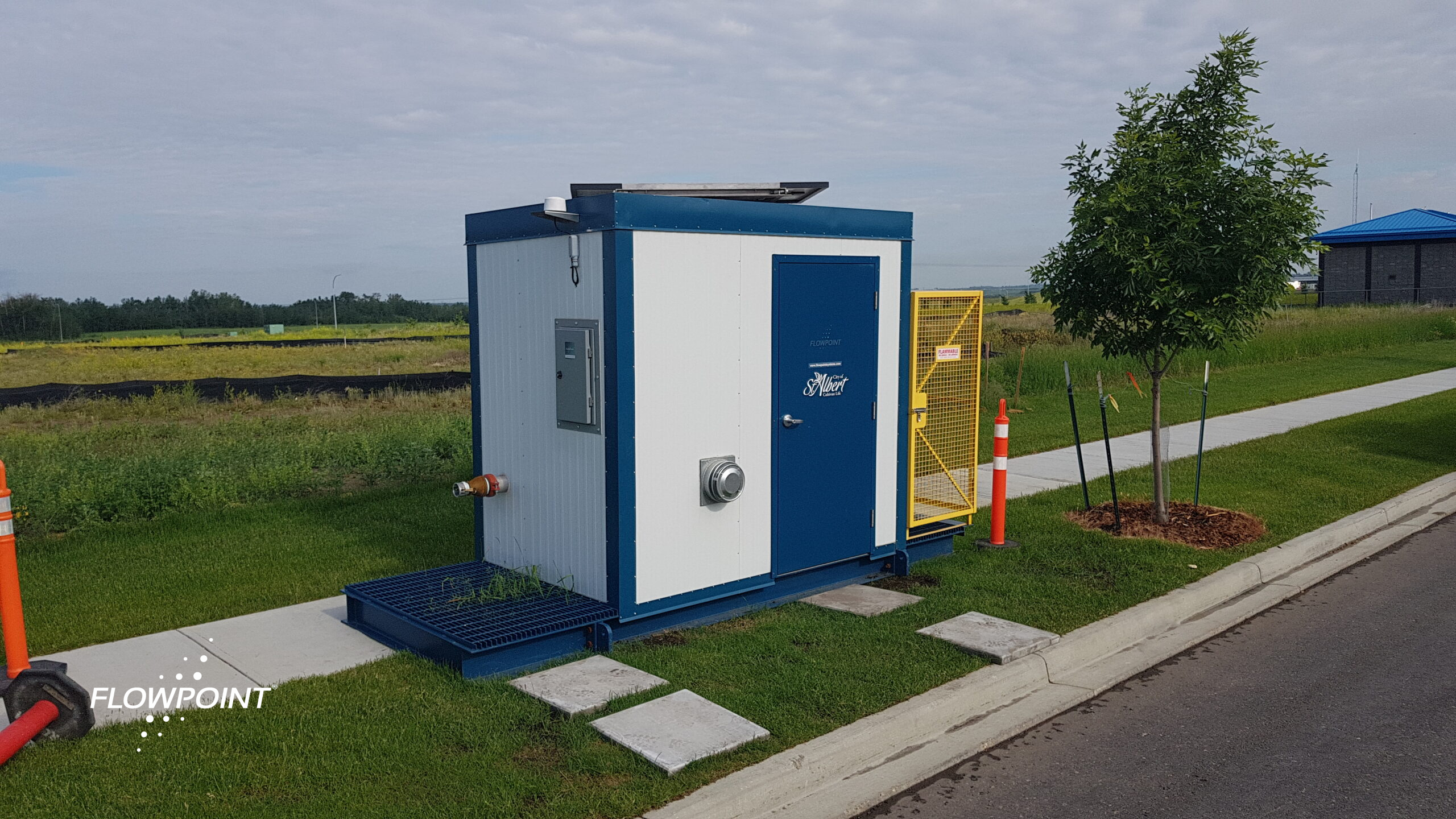

Portable Bulk Water Station: Solar Power for Remote Sites and Emergency Plans
A portable bulk water station gives utilities a way to plan water access where grid power may not reach. For rural routes, seasonal work, or backup loading sites, a remote truck-fill (truckfill) station can help manage who fills and how much they take. Solar power adds another option when a wired power supply would limit site choice. However, a sound plan starts with the water source, truck route, and daily demand. Flowpoint’s Water Solar option supports off-grid use and relocation, with propane heat available for colder months.
Recent events in Pennsylvania show why backup plans matter. On September 22, 2026, Mercersburg Water Authority announced emergency hauling because wells were low and water use was high. By September 25, its update cited both low wells and an equipment failure, offering a useful planning lesson: hauling requires both water access and clear public messaging.

Where a Portable Bulk Water Station Fits
A remote truck fill or truckfill station can support a planned loading point for approved haulers. For example, a utility could assess a backup site for use during repairs or peak demand. Seasonal work may also require access to a site without grid service. In each case, the goal stays clear: give drivers a managed place to fill while staff track use.
Portable doesn’t mean every site is ready for use. Before a move, check the base, pipe connections, truck space, and lifting or transport options. Next, confirm the source can meet the planned draw without harming other users. That early review defines what each move will involve, and Flowpoint’s engineered-to-order solutions address site needs during design.
Put Solar Power in the Right Role
Flowpoint lists solar and propane among the Water General’s energy options for off-grid sites and seasonal programs. Together, these options give teams a starting point for a remote truckfill station. The Water General data sheet outlines the controls, fill choices, and portable options that can inform that discussion.
However, the project must match its power supply to its actual loads. Ask the design team to size solar panels and any battery storage for local sun, use, and weather. Include lights, controls, communications, and each potential load in that review. If the source needs a pump, assess its power needs separately with subsequent generator connections as needed. A solar station power alone does not establish pumping capacity.
Cold weather also needs its own plan. Flowpoint offers propane heat as an option, which teams can assess alongside insulation and site conditions. Other operational tasks to consider include checking exposed pipes, hoses, and drains, as well as the routes drivers use in winter. Also, define who will check fuel and clear snow. Those tasks help turn an off-grid concept into a workable daily service.
Build the Hauling Plan Around the Source
A portable bulk water station supports access to an available source; it does not create a new water supply. First, confirm the source, its approved use, and the volume the owner can provide. Then check the pressure and flow available at the fill point. The hauling plan must also account for travel time, truck size(s), and unloading time(s).
For example, a fast fill offers limited value if trucks spend most of each shift waiting elsewhere. Review the whole route before setting daily load targets. Meanwhile, agree on who will manage queues and respond when demand exceeds the plan. A remote truck-fill station works best when it fits within the rest of the chain. Keep source and delivery records linked through your operating process via Flowpoint’s Water+ Software.

Control Access and Track Each Load
Flowpoint’s station controls support authorized access and metered dispensing. Depending on the setup, drivers can use a PIN or RFID to access water. Water+ and Fusion software support usage review, account management, and billing. As a result, teams can plan around recorded use instead of relying solely on handwritten totals. Then choose the access and payment options that suit your users.
During planning, define who may open accounts and who may approve new haulers. Also decide how staff will handle rate or access changes during an emergency. Our article on smart water systems explores the wider role of cloud tools and shared data. Use that review to map which tasks belong to drivers, office staff, and site crews. Another similar article regarding Bulk Water Myths is useful when planning for a station to suit your needs.
Plan for Gaps in the Connection
A remote truck fill station needs a clear plan for weak or lost communications. The Water General includes digital storage for up to 250 offline transactions and automatically synchronizes once it can reconnect.
Confirm access rules, payment needs, and data recovery for the chosen setup before the site opens. By testing service loss and data reconciliation as part of factory testing, Flowpoint establishes a process to check stored records before the offline limit becomes a concern. For connected operations, review Flowpoint’s cloud software security information with your IT team. This helps bring data access into the same planning process as physical access.
Learn From Remote Project Planning
Remote projects often require teams to solve several site problems at once. Flowpoint’s Sunchild First Nation case study describes a facility that combines treatment, storage, pumping, and controls. This project offers broader lessons in planning and building at a remote site. For your particular application, focus on how each part must work with the site and the operating team.
Similarly, review the portable bulk water station as part of a complete service plan. Assign staff to check the site, inspect equipment, and help drivers. Before opening, we will work with you to run a test load and review the resulting record. These checks can reveal gaps while the team still has time to fix them.

Prepare Your Next Remote Fill Site with a Portable Bulk Water Station
When contacting Flowpoint, start with a short brief for your remote truckfill station plans. Include the water source, expected loads, fill sizes, climate, and energy needs. Next, consider adding cell coverage, planned moves, and the people who will utilize the site. Share any limits on truck access or space constraints early on. These details give the design team a useful basis for selecting the appropriate options.
A solar-powered portable bulk water station can form part of a stronger seasonal or emergency access plan. Its value comes from matching the equipment to the source, site, and workflow. To explore that fit, contact Flowpoint with your project needs. Together, we can review solar power, heat, controls, and communications for your proposed site.

