

How a Commercial Truck-Fill Facility Can Support Airport Operations
A commercial truck-fill facility can give airports more control over water use across the airfield. From fire truck refills to dust control, each task needs a clear way to draw and track water. A water-truck fill station can also help crews manage access when many teams share one source. Meanwhile, de-icing crews need precise water volumes to prepare the required fluid blend. These needs create a clear role for a controlled water-truck fill system, with records that show who used water and how much they took.
Airports already offer useful examples of water reuse and truck filling. For instance, projects in St. Croix, San Francisco, and Detroit show how water sources can serve specific tasks. Those examples point to a wider question for airport teams: how can each fill become easier to manage? Flowpoint’s approach brings access control, metered water delivery, and usage records into that plan. The best fit starts with the task, the source, and the people who use it.

What a Commercial Truck-Fill Facility Adds to an Airport
A shared fill point needs more than a pipe and a place to park. First, airport staff must define who can draw water and which tasks each source can support. Crews then need a clear process that fits their trucks, work hours, and routes. A commercial truck fill facility can bring those needs into one place through controlled access and measured loads. In turn, staff gain a clearer view of demand across shifts and projects.
The design should also account for peak use, not just daily totals. Several trucks may arrive at once when work starts or weather changes. Likewise, the fill rate must match the water supply and each fleet’s needs. Flowpoint’s guide for engineering partners explores the value of setting site needs early. That planning helps teams avoid a layout that looks sound on paper but slows crews in the field.
Fire Truck Refills and Water Reuse in St Croix
Henry E. Rohlsen International Airport in St. Croix offers a useful example of rainwater reuse. A published Industrial Flow Solutions case study describes a 50,000-gallon underground cistern serving the airport’s rescue and firefighting facility. Pumps move water through a six-inch pipe to a remote truck-fill point, about 500 feet away. The project also includes backup pumps, pump controls, and flow checks to support its role.
This example shows how storage and truck access can work as one planned system. However, each airport must set its own fire service supply and response needs. A proposed water-truck fill system should support those needs without delaying urgent refills. For that reason, teams should address access during outages, reserve supply, and emergency use at the outset. Flowpoint’s engineered-to-order solutions help the project team assess those site needs.

Reclaimed Water-truck Fill System Access for Airport Contractors
San Francisco International Airport provides another useful reference for a commercial truck-fill facility. The 2021 BACWA guide hosted by NapaSan lists the airport on printed page 19. Its entry describes recycled-water access and states that the service excludes outside contractors and nearby residents. It also records training and vehicle checks as part of the program. This historical example shows how an airport can link water reuse with limits on who may collect it.
Elsewhere, that approach could help staff manage approved contractors across many work zones. For example, each account could name the firm that drew a load. Staff could then review usage against the job scope and close access when the work ends. The commercial truckfill facility would serve a defined group, with clear rules for each source. Reclaimed water would still need to meet the needs and rules for its planned use.
Dust Control and Faster Filling at Detroit
Detroit Metropolitan Wayne County Airport shows how source choice can support construction work. The airport authority’s runway project report describes crews drawing dust-control water from onsite stormwater ponds. According to the authority, this approach cut truck-fill times and reduced the project’s water footprint. Thus, the example connects water reuse with a direct benefit for crews on a busy site.
A controlled water-truck fill station could add load records to such a project. Those records could help staff compare water use across work areas, contractors, or construction stages. In addition, crews could review demand changes as earthwork shifts across the site. Such tracking would support better planning, although savings would depend on the actual layout and site conditions. These examples show where Flowpoint could fit within a new project.

Controlled Water Dosing for De icing Operations
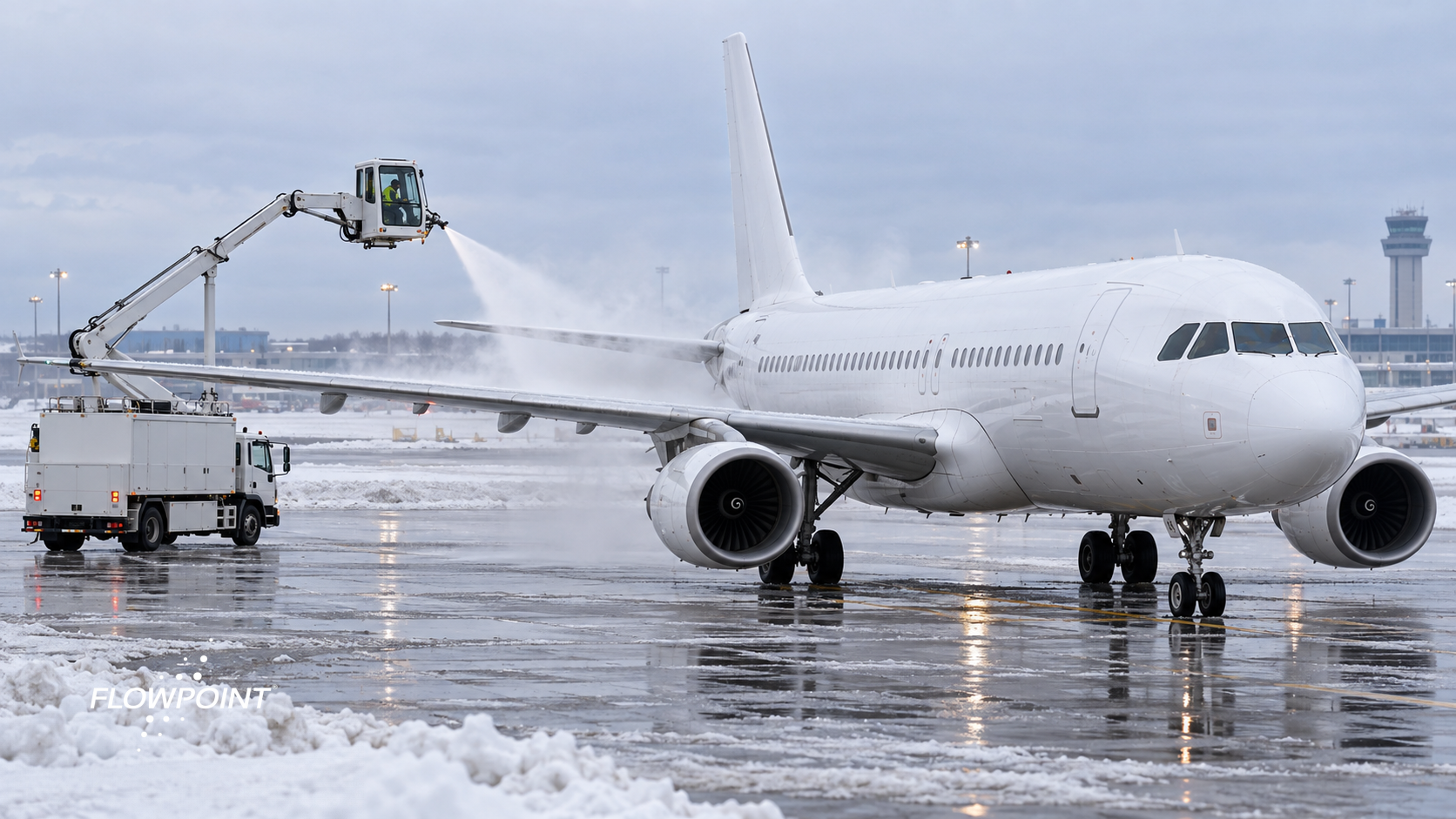
De-icing adds a distinct task for a commercial truck-fill facility: supplying the right water volume for an approved fluid blend. The crew first works out the water needed for the fluid on hand and the required blend. Flowpoint’s application then provides a controlled way to dispense that set amount of water. Next, the crew follows its blending process and checks the finished fluid before use. Flowpoint’s role here covers water delivery; separate equipment handles the glycol.
Precise water dosing starts with sound inputs. For example, a partly filled truck may already hold fluid at a known strength. The crew must account for that fluid, the new product, and the target blend before setting the water dose. Therefore, metered water delivery supports the process but does not by itself verify the final blend. Flowpoint’s custom control panels provide a starting point to review the controls, data links, and site tests.
Turn Each Fill into a Useful Record
A commercial truck fill facility can serve both billing and in-house water tracking. Some loads may support paid contractor work, while others serve airport crews. Either way, clear records help staff see where water goes. Flowpoint’s Water+ management tools support account management, usage reports, and remote oversight. As a result, teams can review activity without relying solely on handwritten notes from each driver.
Usage data also gives airport teams a basis for better questions. Does one work zone draw more water than planned? Are trucks waiting because demand peaks during a short window? Over time, a water-truck fill system can help staff spot patterns that need a closer look. Flowpoint’s project examples and customer accounts include reclaimed-water feedback on access, account management, and usage oversight.
Plan Around the Water Task and the Truck
The right commercial truck-fill facility begins with a defined use and a suitable water source. Start by mapping truck routes, expected loads, fill times, and access needs. Then review metering, controls, drainage, winter conditions, and the reports staff will need. Each task deserves its own review, since fire service and de-icing crews have different needs. A common control approach can still support distinct rules for use.
Finally, turn those needs into a clear scope before choosing equipment. A well-planned water-truck fill station can help teams manage access, dispense set volumes, and build useful records. To explore what fits your airport, discuss your project with Flowpoint. Bring your source details, truck needs, and reporting goals so the team can assess the right approach. That review can turn a broad water-use goal into a clear site plan.
