
Drought conditions in Texas and California have further compounded the water scarcity issue. This has forced many communities to consider reclaimed water as an alternative.
People have given reclaimed water an unfair reputation, thanks to the vivid but slightly inaccurate slogan ‘toilet to tap.’
Treatment plants take wastewater effluent and clean it extensively, producing reclaimed water
Most of the time, plants send it back to a river. In plenty of communities, though, they reclaim some, hold it in tanks. From there they run it through ‘purple pipes’ for irrigation, manufacturing, cooling, and other non-drinking uses.
Austin Water, Texas, began providing reclaimed water in 1974, and since that time, the system has grown considerably.
In fact, Austin Water’s current system comprises approximately 51 miles of reclaimed water transmission mains.
Currently, the City of Austin recycles 3-5% of its wastewater effluent, depending on the weather. Austin’s Water Reclamation Initiative (WRI), also know as its wastewater recycling program. Is integral to the City’s water conservation program and saved approximately 1.1 billion gallons of drinking water in 2014-15.
Future plans for the system consist of more than 130 miles of transmission mains. With estimates of use pegged at more than 8 billion gallons annually.
The reclaimed water in Austin’s purple pipes comes from the Walnut Creek Treatment Plant in east Austin.
Even though people don’t drink it, reclaimed water is clean. Because of that, it works well for irrigation, landscaping, cooling towers, and toilet flushing.
Estimates indicate that some air-conditioning systems could account for as much as 50% of the potable water supplied to buildings
Austin Water is planning for a new $4.7 million reclaimed water line to feed the state capitol complex, portions of The University of Texas campus, and four Travis County buildings along Guadeloupe Street.
By actively incorporating reclaimed water use into municipal, county, and state buildings, Austin is rapidly becoming the role model other municipalities can aspire to.
“We will save almost 12 million gallons of water a year, and the piping will pay for itself in a little over six years, and after that, taxpayers will be saving over $150 thousand annually, just from these four buildings,” said Travis County Commissioner Brigid Shea.
Shwetha Pandurangi, Austin Water’s Reclaimed Water Project Manager, recently reported, “The City of Austin is proud to announce that reclaimed water will soon be extended to use in commercial and industrial laundries.”
The eventual goal is to extend the line further downtown to serve the developments that continue to change Austin’s skyline.
“I think this is a result of many, many leaders saying that we’ve got to think differently about water in the future, and this is one of the things we are doing about that,” said Austin Water Director Greg Meszaros.
It will take almost two years to complete the reclaimed water line. There are no immediate plans to process reclaimed water into a quality that’s drinkable. However, Austin Water officials say that could eventually become an option.
Clean Water Services in Hillsboro, Oregon, recently brewed beer made with treated effluent directly from their wastewater treatment plant.
Reclaimed water customers must guarantee that their reclaimed-water plumbing never connects to potable-water plumbing
They must conduct an initial test of the integrity of both plumbing systems as required by the plumbing code before receiving reclaimed water service.
Regulations require annual plumbing integrity tests, which teams usually conduct in conjunction with backflow prevention device testing.
Once testing confirms system integrity, teams submit the results to Austin Water Utility’s Special Services Division.
During potable-water testing, crews keep the potable plumbing pressurized and depressurize the reclaimed-water plumbing.

After that, they keep an eye on the reclaimed lines; if pressure climbs, it likely means a cross-connection
Crews then repeat the procedure in reverse. Meaning that they pressurize the reclaimed-water lines and depressurize the potable-water plumbing. Then they monitor it for pressure increases that would indicate a cross-connection.
You can test other ways too—just get it approved first.
Austin Water constructed recycled bulk water dispensing facilities at several locations within the Austin area. All in an effort to make reclaimed water available to customers with commercial hauler trucks or hauling it themselves.
These bulk dispensing stations supply reclaimed water for all non-potable uses. Including landscaping, irrigation, pest control, dust control, and construction.
These bulk water facilities are automated, turn-key sites that run on a prepaid system. To use one, set up an account with Austin Water and prepay funds into the water hauler’s account.
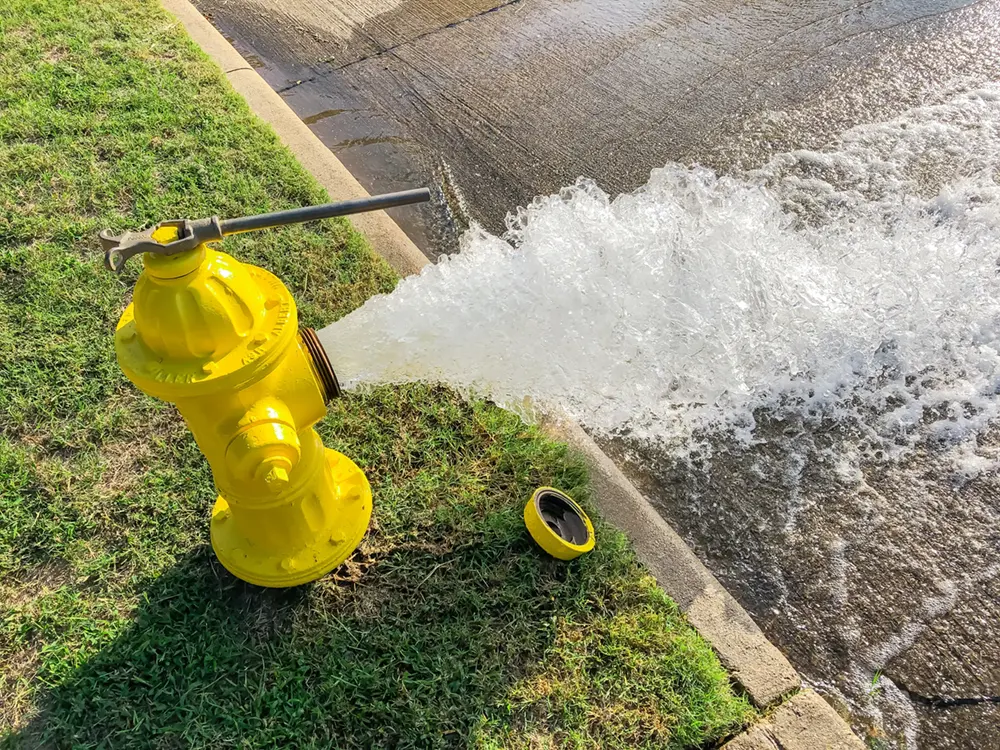
The goals behind constructing these facilities were to conserve potable water where the use of water is for non-potable use. This minimizes the use of hydrants for non-potable needs. Further it makes reclaimed water available to parties who don’t have direct access a City reclaimed water meter.
With an automated dispensing station and monitoring software designed to track consumption and use, there is less need to burden employees with these regular monitoring tasks.
The system tracks customer use through software, invoices, and usage reports either on demand or automatically on schedule. Which ensures accurate, straightforward billing, and accounting.
If a customer falls behind on payments, staff can remotely lock their access until they pay the account.
With an automated bulk dispenser, customers get exactly the water they need—no more
And it’s tracked down to the gallon, keeping waste minimal and costs low. Haulers enter the exact amount of water they need, and if they make a mistake, they can always press an emergency stop button.
Once again, the automated process eliminates human error and dispenses the precise volume required.
Nothing more, nothing less. Advanced algorithms in the system’s software allow the valve to close precisely at the desired volume without hammering your distribution system.
By allowing municipalities or utilities to charge a fair price for water used and accounting for all the water dispensed to water haulers, there is the potential to realize more profit because automation can limit the need for on-site employees.
Automatic reports capture exactly when, where, and how much water each customer buys, so the business stays easy to track.
Multiple stations can wirelessly send data over the internet, letting staff manage them all from a single location. Time is money, and an automated reclaimed water dispensing system will save time.

While automated bulk water dispensing systems are perfect for municipalities and utilities for a variety of cost and safety-related reasons, they are also beneficial to the water hauler.
Systems can be set up to give the consumer access to water 24 hours a day, seven days a week, without using easily lost or damaged keys, fobs, or cards.
On-screen instructions walk the customer through the use of the water station, making the system simple to use
Record keeping is also simplified for the water hauler, with optional on-site receipts and the ability to automatically send electronic receipts and transactional data reports via email daily, weekly, or monthly basis. Automated systems also show the customer their account balance with each purchase, further easing the burden of accounting for the consumer.
Using the machine is similar to accessing a bank’s ATM (automatic teller machine). Once an account is established, the customer is given an access number and a PIN or multiple access numbers, depending on their needs.
To use the machine, the user drives up to the facility, lines the filling port of the vehicle up with the filling arm or connects their hose, enters their customer ID information (access number and PIN), enter the amount of water in gallons they need and press the START button.
To stop the flow at any time, there is a shut-off button
The demand for our communities’ potable water is increasing, so putting a reclaimed water system into place to limit the demand for potable water systems is the wave of the future.
Many companies can treat wastewater to reclaimed-water standards and deliver turn-key systems that put recycled water in people’s hands—so they don’t waste precious potable supplies on uses reclaimed water can handle.